Your kitchen cabinets look tired, but replacing them could cost $15,000 you don’t have. What if you could achieve that custom, high-end look in just four days for under $400? How to use chalk paint on kitchen cabinets is the budget-friendly secret thousands of homeowners are using to bypass massive renovations. Unlike traditional paint that requires sanding and priming, chalk paint adheres to almost any surface with minimal prep. One homeowner even saved enough repainting their cabinets to fund a Caribbean cruise—proving you don’t need deep pockets for a kitchen transformation. In this guide, you’ll discover exactly how to apply chalk paint for a durable, beautiful finish that holds up to daily kitchen chaos.
Remove Every Screw Before Touching Paint
Skipping hardware removal guarantees uneven coverage and wasted paint. Start by taking off every door and drawer front—this isn’t optional. Next, remove all handles, hinges, and knobs. Lay doors flat on sawhorses or a drop cloth; never paint them while hanging. Now clean every surface with warm water and mild dish soap only. Crucial warning: Avoid degreasers or all-purpose cleaners—their chemicals react unpredictably with chalk paint, causing peeling within weeks. Kitchen cabinets accumulate invisible cooking grease that repels paint. Scrub with a microfiber cloth, rinse thoroughly, and let dry completely. Rush this step, and your $200 paint job fails before the wax goes on.
Achieve Creamy Paint Consistency in 60 Seconds
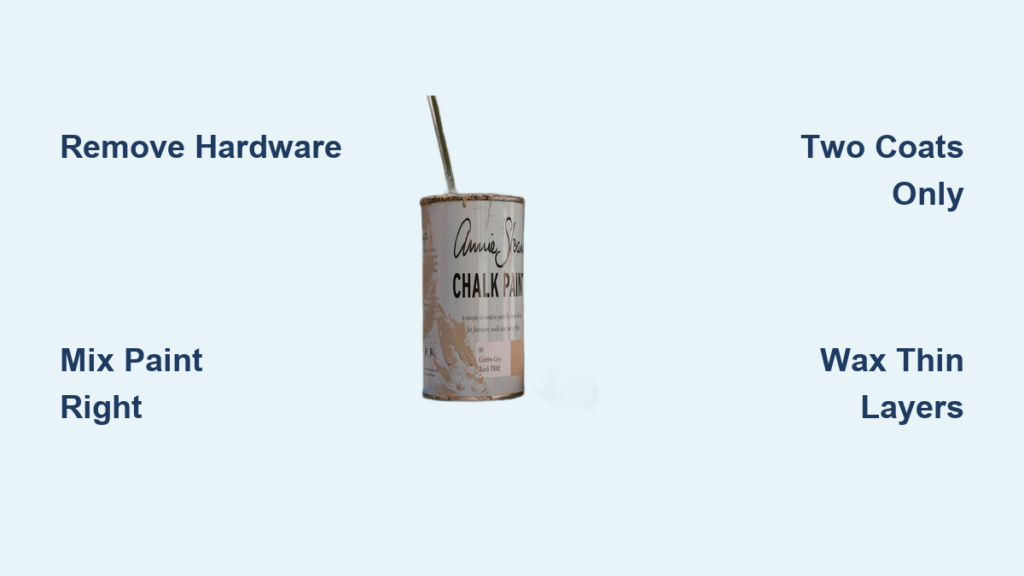
Thickened paint creates streaks that ruin your finish. Open your Chalk Paint® container and check texture—exposed paint often thickens like peanut butter. Add water drop by drop while stirring. Stop when it flows like heavy cream off your brush (not watery soup). Test on scrap wood: it should self-level without brush marks. Annie Sloan recommends 1-2 tablespoons per quart max—over-thinning weakens coverage. Why this matters: proper consistency ensures end grain wood (like cabinet edges) absorbs evenly without thirsty patches. Thick paint = extra coats = wasted time.
Load Brushes Like a Pro for Flawless Coverage
Your brush technique makes or breaks the finish. Dip your Annie Sloan Flat Brush halfway into paint—never submerge the ferrule (metal part). Tap once against the can’s edge to shed excess. Now apply paint using only the brush tip, not the belly. Start by “crisscrossing” strokes in every direction—this forces paint into wood pores. Pay special attention to end grain areas (cabinet edges and drawer fronts) which drink paint like a sponge. You’ll immediately see uneven absorption; that’s normal. Keep working until the surface looks uniformly covered with no “dry spots.” This isn’t about neatness yet—it’s about saturation.
Why Brush Direction Matters for Smoothness
After initial coverage, switch to feathering. Hold your brush like a pencil with light pressure—imagine touching a butterfly’s wing. Use minimal paint on the brush and make long, single-direction strokes. Overlap each stroke by 50%. Work quickly; chalk paint dries fast. This technique melts brush marks into a glassy surface. Pro tip: Feather within 15 minutes of applying the base coat while paint is still wet. Miss this window, and you’ll sand later.
Apply Exactly Two Coats (No Exceptions)
One coat looks thin and uneven, especially over dark stains. Two coats are non-negotiable for kitchen cabinets. Let the first coat dry 2-4 hours (touch-dry but not hard). Sand lightly with 220-grit paper only if brush marks remain—most don’t need it. Wipe dust with a tack cloth. Apply the second coat using feathering strokes immediately. Dark cabinets or oak grain may need a third coat; test on a hidden area first. Critical: Never skip drying time between coats. Rushing traps moisture, causing cracks when you apply wax.
Wax Like a Surgeon for Kitchen-Grade Protection
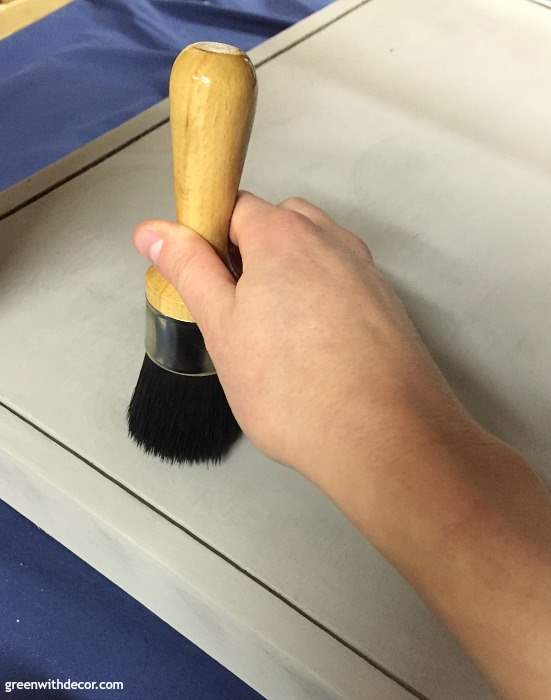
Waxing wrong creates sticky, yellowing disasters. Load your Chalk Paint® Wax Brush with a pea-sized amount of clear wax. Apply in thin layers using circular motions, focusing on corners and edges where hands grab. Work in 2×2 foot sections—kitchen cabinets get abused, so ensure wax penetrates every pore. Immediate action required: Wipe off excess wax within 5 minutes using a lint-free cloth. Buff lightly until no residue transfers to the cloth. Leftover wax = sticky spots that collect grime. For high-traffic areas (like lower cabinets), apply a second wax coat after 24 hours.
Why Buffing Creates the Signature Look
After 12 hours, buff with a clean cotton cloth using firm pressure. This isn’t polishing—it’s activating the wax’s protective layer. You’ll see the finish transform from cloudy to a soft, velvety sheen. Buffing too soon leaves streaks; too late makes wax hard to remove. The final look should feel smooth, not waxy, and repel water droplets.
Cure for 14 Days (But Use Cabinets Immediately)
Full cure takes two weeks, but you don’t wait idle. After the final wax coat, rehang doors 24 hours later. Use cabinets gently during curing: wipe spills immediately, avoid heavy objects, and skip abrasive cleaners. Myth busting: You don’t need to “baby” cabinets. Normal use actually helps the cure. Just don’t scrub with steel wool or soak in bleach. Full hardness develops as wax polymers cross-link—this chemical process can’t be rushed.
Avoid These 3 Costly Mistakes
Substituting “Cheaper” Waxes
Using furniture wax or paste wax seems smart until it yellows in six months. Chalk Paint® Wax has UV inhibitors and pH balancers that generic products lack. One homeowner’s “savings” cost them a full repaint when their $5 grocery store wax turned cabinets orange.
Over-Waxing the First Coat
Applying thick wax layers to “save time” backfires. Excess wax never cures, creating a gummy surface. Always apply thin, even layers—it takes longer but lasts years.
Skipping End Grain Treatment
Cabinet edges absorb 3x more paint. If they look patchy after two coats, dab extra paint only on edges with a small brush. Don’t flood the whole door—target the problem.
Switch to Lacquer for Heavy-Duty Kitchens
If you run a commercial kitchen or have toddlers who treat cabinets like jungle gyms, Chalk Paint® Lacquer is your armor. It dries harder than wax and resists hot pans and sticky fingers. Apply identically to paint: two thin coats, 4 hours between coats. Key difference: Lacquer needs 72 hours before gentle use (vs. 24 for wax). Never mix wax and lacquer—they repel each other. Annie Sloan’s lacquer tutorial details humidity adjustments; follow it exactly or get bubbles.
Real Cost Breakdown vs. Replacement
Replacing mid-range cabinets costs $8,000-$15,000. Compare that to your chalk paint project:
| Item | Cost |
|---|---|
| Chalk Paint® (3 colors) | $120 |
| Wax & brushes | $65 |
| Prep supplies | $15 |
| Total | $200 |
That’s 98% less than replacement. Even with premium colors and three wax coats, you stay under $400. One client documented saving $12,300—enough for that cruise vacation while gaining custom-looking cabinets.
Your 4-Day Project Timeline
- Day 1: Remove hardware, clean, and prep surfaces (4-6 hours)
- Day 2: First paint coat on all doors/drawers (3 hours + drying)
- Day 3: Second paint coat + sanding if needed (2 hours + drying)
- Day 4: Wax application and reassembly (4 hours)
Weekend warrior tip: Paint cabinet boxes (frames) while doors dry. They’re less visible, so perfection isn’t critical. Reassemble during dinner—you’ll eat in a transformed kitchen that night.
Maintain Like a Pro for 10-Year Durability
Daily cleaning is simple: wipe with a damp microfiber cloth and mild soap. For stuck-on food, use a magic eraser gently—never scrub hard. Never use: Bleach, oven cleaners, or abrasive pads—they strip wax instantly. Re-wax only when water stops beading (usually after 3-5 years). Apply one thin coat, wait 24 hours, and buff. Most homeowners never need this—the initial wax job lasts a decade with basic care.
Your chalk-painted cabinets will develop a rich patina over time, unlike sterile new cabinets. That subtle wear tells a story of meals shared and laughter around your table—the kind of character no showroom can replicate. Start with a bathroom vanity to practice, then tackle your kitchen. In four days, you’ll have the kitchen you love without the debt you dread. Grab your brushes; your transformation begins now.