You’ve just tossed vegetable scraps into your shiny new compost bin, only to discover a sour odor and fruit flies swarming by lunchtime. If your kitchen compost bin feels more like a nuisance than an eco-solution, you’re not alone—90% of composting failures stem from improper bin usage, not the system itself. This guide cuts through the confusion with battle-tested methods to keep your bin odor-free while transforming food waste into garden gold. Whether you’re using a $20 countertop pail or a $500 electric composter, you’ll master the exact steps to use your kitchen compost bin effectively from day one.
Stop guessing what scraps belong where or why your bin reeks after two days. You’ll learn precise emptying schedules, odor-killing tricks professionals use, and exactly how to match your bin type to your waste stream. Most importantly, you’ll discover why “empty daily” is outdated advice for modern filtered bins—and when freezing scraps actually backfires.
Why Your Kitchen Compost Bin Smells After Just One Day
Overfilling with wet scraps is the #1 cause of foul odors—especially when you add coffee grounds, melon rinds, or lettuce without balancing them. Food waste needs a 2:1 ratio of dry “browns” (like shredded paper) to wet “greens” to prevent slimy decomposition. When you dump in onion skins without adding carbon-rich material, anaerobic bacteria take over, creating that rotten-egg stench within hours.
How to Stop Odors Before They Start
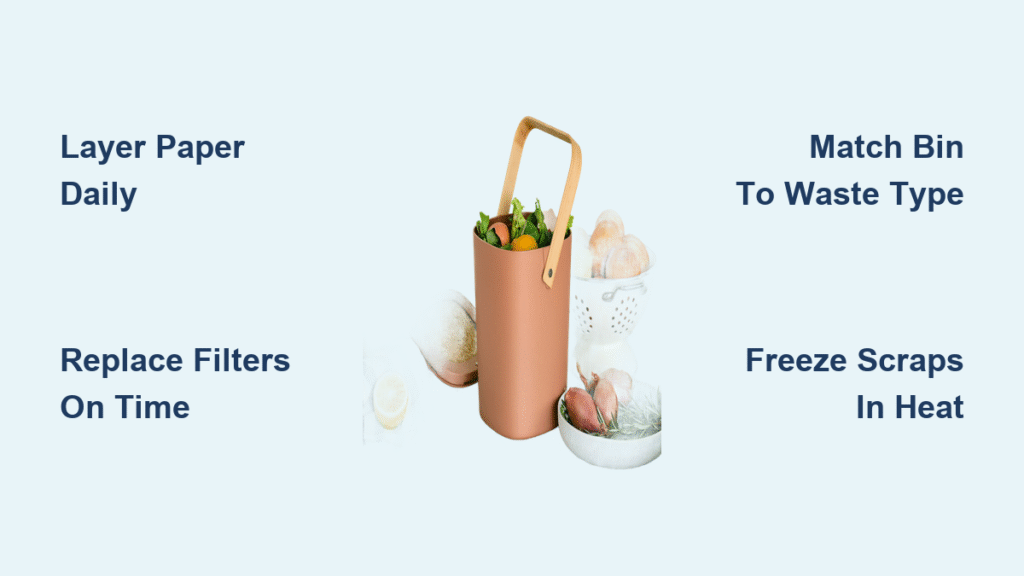
Add paper daily, not just when emptying. Tear newspaper into 2-inch strips and layer them over vegetable scraps as you add them. This absorbs moisture instantly and maintains the critical carbon balance. For every cup of wet scraps, add two handfuls of shredded paper. Keep a dedicated “compost paper” bin next to your cutting board—use junk mail, paper towels, or even pizza box cardboard.
Never skip the freezer buffer during hot weather. When temperatures exceed 75°F (24°C), transfer scraps to a biodegradable bag in your freezer after filling your countertop bin halfway. This pauses decomposition without thawing messes—simply drop the frozen block into your outdoor bin or municipal cart.
Choose Your Bin Based on What You Actually Throw Away

Standard countertop pails only work if you compost outdoors daily. If you’re using a backyard pile or municipal green cart, stainless steel models like OXO Good Grips ($35) handle vegetable scraps perfectly. But if you toss meat bones, fish skins, or takeout leftovers, you’re setting yourself up for maggot infestations—standard bins can’t process these.
Match Your Bin to Your Trash Stream
For apartment dwellers with municipal pickup: Get a sealed bin with charcoal filter (Full Circle Breeze, $42). These accept meat, bones, and cooked food because city facilities reach 140°F—temperatures impossible in home systems. Empty every 3 days max, and replace the $6 filter every 90 days.
For zero-yard households with meat waste: Jump straight to a Bokashi bucket ($55 with bran). Fermentation handles ALL food scraps, including dairy and greasy pizza. Layer scraps with EM bran, press out air, and drain “compost tea” every 48 hours. Bury the fermented waste in garden soil after 14 days.
For strict vegetarians: Opt for a worm bin kit ($95). Red wigglers devour coffee grounds and veggie scraps but die from meat or oils. Keep bedding damp as a wrung-out sponge, and never add citrus peels—acid burns their skin.
Fix Fruit Flies in 24 Hours With This Filter Trick
Expired charcoal filters are why fruit flies invade even sealed bins. Most people replace filters quarterly, but summer humidity saturates them in 45 days. When flies appear, freeze your bin’s contents for 24 hours (kills eggs), then scrub the lid gasket with vinegar—residue there blocks the seal.
Three-Step Fly Eradication
- Remove ALL visible scraps and place them in a sealed bag in the freezer
- Soak the empty bin in 1:10 vinegar-water solution for 20 minutes
- Insert a new filter and line the bottom with paper towels before restarting
Pro Tip: Place a slice of raw potato in your bin for 4 hours—flies lay eggs in it, then toss the infested slice. Prevents future outbreaks for weeks.
Position Your Bin Where You Won’t Forget It
Countertop placement fails 70% of users because bins get shoved behind the toaster. Your bin must live within 18 inches of your cutting board—ideal spots are next to the sink or beside the coffee maker. If you use a ceramic bin, avoid direct sunlight (cracks glaze over time).
Under-Sink Storage That Actually Works
For families generating over 1 quart of daily scraps, choose bins with:
– Locking lids (prevents raccoons if stored in garage)
– 12-inch minimum height (fits standard cabinet clearance)
– Gasket seals (test by closing lid on dollar bill—it shouldn’t slip out)
Critical Mistake: Never store worm bins near refrigerators. The compressor’s heat dries out bedding, killing worms within days. Basements or closets maintain the 55-77°F (13-25°C) temperature worms need.
Deep-Clean Your Bin in 10 Minutes Weekly
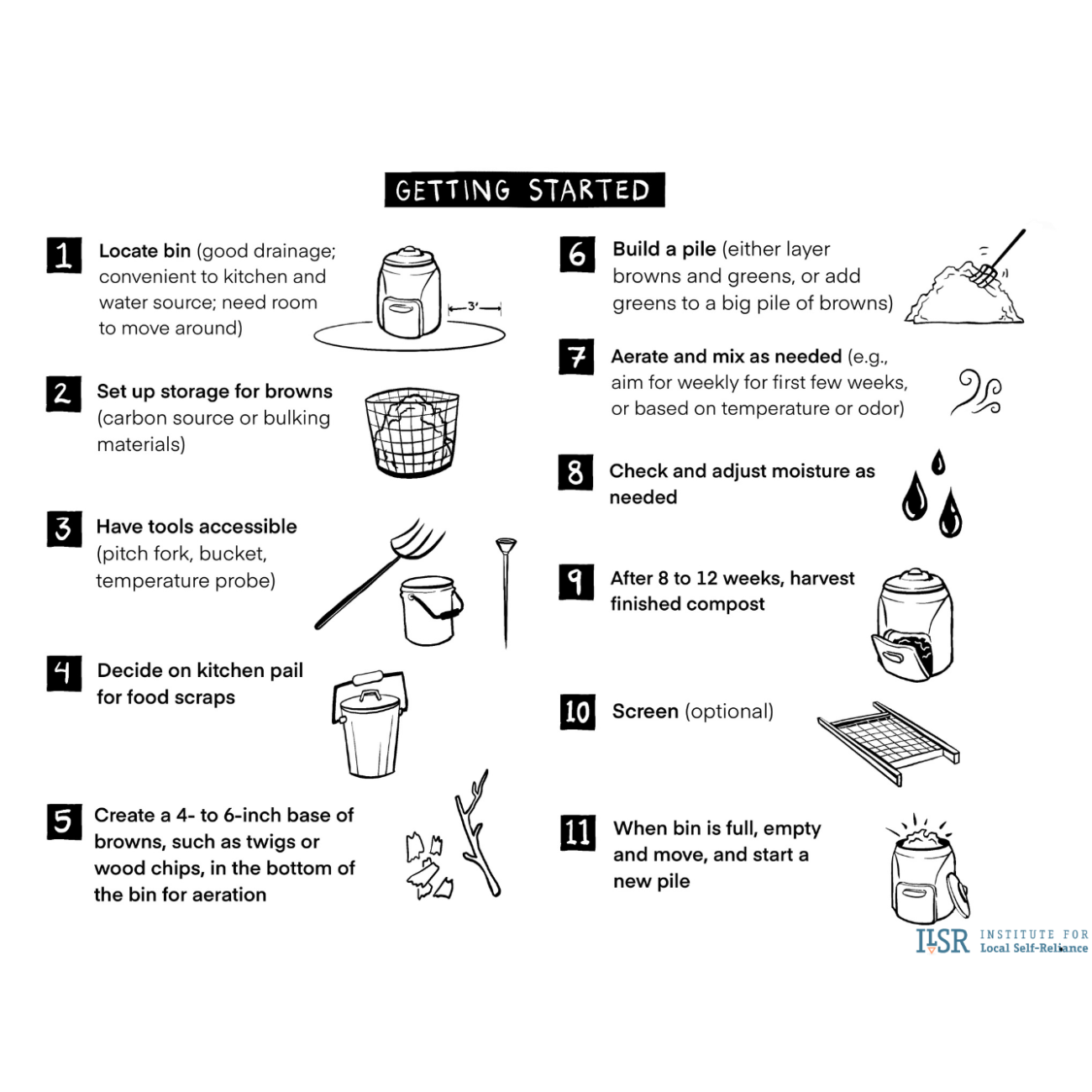
Residue under the lid causes persistent odors even with fresh filters. Every Sunday, remove the charcoal filter and wash the entire bin with:
– Dish soap + warm water for plastic/stainless bins (dishwasher-safe parts go on top rack)
– Vinegar spray for ceramic bins (prevents etching from harsh cleaners)
– Baking soda paste for stubborn coffee stains (scrub with old toothbrush)
Filter Replacement Hack
Buy 4-pack filters ($18) and replace them every 60 days—not 90. Mark replacements on your calendar as “Compost Filter Swap” so you never guess. When the lid smells sour despite cleaning, the filter is spent even if it looks intact.
Troubleshoot Slimy Bin Bottoms Immediately
Excess moisture means you’re missing the paper layer step. If liquid pools at the bottom, your scraps are drowning the beneficial microbes. Fix it now:
1. Empty the bin immediately
2. Line the entire bottom with 3 paper towels
3. Add a ½-inch layer of shredded cardboard
4. Resume adding scraps with paper between each addition
Winter Warning: Never leave bins in unheated garages. Below 40°F (4°C), decomposition stops, causing putrefaction when temperatures rise. Keep countertop bins indoors and use the freezer method during cold snaps.
Upgrade Only When Your Current Bin Fails You

Don’t buy an electric composter ($350+) until you’ve mastered basic systems. These units fail most users because they require perfect carbon balancing—add too much bread without greens, and the microbes die. Start with a $25 pail, then move to a filtered bin only if odors persist after 30 days of proper use.
Budget-Friendly Progression
- Month 1-2: Basic countertop pail + daily paper layering
- Month 3: Add charcoal filter bin if fruit flies appear
- Month 6+: Consider Bokashi if you compost meat regularly
Proven Shortcut: Freeze citrus peels and onion skins—their acidity slows decomposition. Add them last to your outdoor pile so they break down faster.
Mastering your kitchen compost bin boils down to three non-negotiable habits: layer paper with every scrap, replace filters on schedule, and match your bin type to your actual waste. Within two weeks of implementing these steps, you’ll empty your bin without holding your breath—and transform food waste from a chore into your most satisfying eco-habit. Start tonight by placing shredded paper beside your cutting board; tomorrow, you’ll add scraps without a second thought. Your garden (and landfill) will thank you.