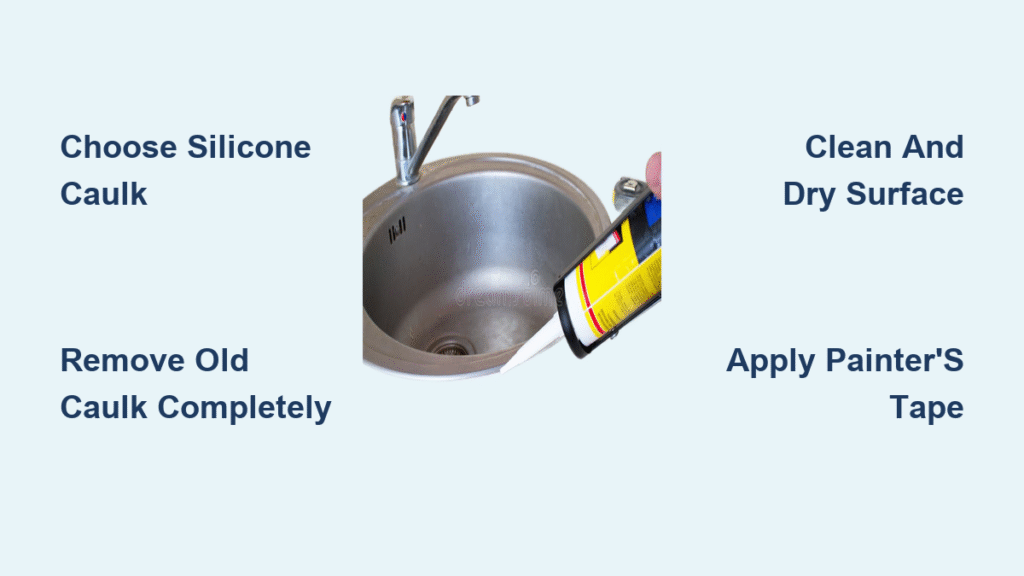
That cracked, peeling caulk around your kitchen sink isn’t just an eyesore—it’s a ticking time bomb for water damage. When caulk fails, moisture seeps into seams, inviting mold growth and potentially warping countertops. The solution? Learning how to recaulk kitchen sink properly. This $50 DIY project takes just 2-3 hours of active work and prevents thousands in potential water damage repairs. Forget calling a plumber; with the right approach, you’ll achieve professional results that keep your kitchen dry and pristine for years.
Most homeowners panic when they see crumbling caulk, but this is one of the easiest kitchen fixes. By following these precise steps, you’ll create a waterproof barrier that handles daily splashes and steam from hot dishes. Let’s transform that deteriorating seal into a flawless, long-lasting finish that makes your entire kitchen look renewed.
Choose Right Caulk Type
Silicone caulk dominates kitchen applications for good reason. Unlike latex alternatives, silicone remains flexible under temperature changes, creates a waterproof barrier, and resists mildew growth in humid environments. For stainless steel sinks, 100% clear silicone is non-negotiable—it maintains the metallic appearance without yellowing. White porcelain or composite sinks need pigmented silicone matching your fixture color to hide everyday grime.
Skip latex caulk entirely for kitchen sinks. While easier to apply, latex breaks down faster under constant moisture and heat exposure from dishwashing. Porcelain sinks can occasionally use specialized hybrids like Kwik Seal Ultra, but silicone remains the gold standard for kitchen durability. Always verify “mildew-resistant” on the label—this formulation contains additives that prevent the black streaks you see on neglected seals.
Gather Essential Tools
Must-have tools include a metal-frame caulk gun (plastic bends under pressure), a razor scraper for stubborn caulk, and a plastic putty knife to prevent surface scratches. You’ll also need lint-free cloths, painter’s tape for crisp edges, and old towels to protect countertops. Critical cleaning supplies are denatured alcohol (for silicone residue) and isopropyl alcohol (final surface prep)—vinegar works in a pinch but isn’t as effective on grease.
Safety gear is non-negotiable: Nitrile gloves prevent caulk from bonding to skin, and safety glasses shield eyes from flying debris during removal. Most homeowners already own half these items, keeping your total investment under $40. Never skip the plastic putty knife—using metal on stainless steel guarantees permanent scratches that ruin your sink’s finish.
Remove Old Caulk Completely
:max_bytes(150000):strip_icc()/how-to-remove-old-caulk-1824827-hero-4863fcf5169e426da8f822429ed46301.jpg)
Start with softening agents based on your existing caulk type. For silicone caulk, apply an acetone-soaked cloth along the seam and wait 15-20 minutes—this dissolves the bond without damaging surfaces. For water-based caulk, a warm water towel softens residue in 10 minutes. Physical removal requires precision: Score the caulk edge at a 45-degree angle with a utility knife, then lift fragments using a plastic putty knife in 6-inch sections.
Surface-specific caution is critical: Stainless steel demands plastic tools only, while porcelain tolerates razor blades. Run your finger along the seam—it must feel completely smooth with no sticky residue. Incomplete removal is the #1 reason new caulk fails; tiny fragments prevent proper adhesion. Shine a flashlight sideways across the seam to spot hidden remnants before proceeding.
Clean and Dry Surface
Deep cleaning prevents future mold by eliminating grease and mildew spores. Wipe the entire seam with denatured alcohol using a soft brush for stubborn buildup, then do a final pass with isopropyl alcohol. Porous surfaces like granite need extra attention—scrub gently to avoid forcing contaminants deeper. Drying time is non-negotiable: Allow 2 hours minimum, but marble or granite requires 24-48 hours. Test dryness by pressing painter’s tape to the surface—it shouldn’t stick if moisture remains.
Protect during drying by avoiding sink use and covering loosely with paper towels (never plastic, which traps moisture). If alcohol wipes pick up discoloration, repeat cleaning until the cloth comes away clean. This step seems tedious but makes the difference between a 2-year seal and a 10-year seal—water will exploit any microscopic residue.
Apply Painter’s Tape
Tape placement creates professional edges that DIYers often botch. Apply painter’s tape 1/8 inch from the seam on both countertop and sink surfaces, leaving a precise 1/4-inch gap for the new bead. Press the tape firmly along its entire length, then burnish edges with your fingernail—this seals microscopic gaps where caulk could seep. For curved sink corners, cut tape pieces at 45-degree angles to avoid wrinkles.
Pro tip: Remove the tape backing in one continuous motion to prevent jagged edges. If tape lifts during application, reposition immediately—delayed fixes leave uneven lines. This 5-minute step saves hours of messy cleanup and is the secret to contractor-quality results.
Master Caulk Application
Tube preparation makes or breaks the bead: Cut the nozzle at a 45-degree angle starting with a 1/8-inch opening (widen slightly for wider gaps). Puncture the inner seal with a long nail, then load the tube into your caulk gun at a slight angle. Test the bead on cardboard first—aim for a consistent 1/4-inch diameter, like a standard pencil lead. Hold the gun at a steady 45-degree angle to the seam, applying even pressure as you move slowly along the line.
Speed control is crucial: Move too fast and the bead thins; too slow and it bulges. For straight sections, work from one end to the other without stopping—interruptions create weak seams. If you run out of caulk mid-line, overlap the new bead by 1 inch over the existing one before smoothing. Never overfill; excess caulk creates messy cleanup and weak adhesion points.
Smooth Like Professional

Finger smoothing requires technique: Dip your index finger in soapy water (1 tsp dish soap per cup of water), then glide it along the bead in one continuous motion with light pressure. Let the water do the work—pressing too hard squishes caulk into gaps. Tool alternatives include a plastic caulk smoothing tool for perfect radius curves or a popsicle stick wrapped in damp cloth for tight corners. Avoid metal tools that scratch fresh silicone.
Remove painter’s tape within 5-10 minutes while the caulk is still wet, pulling it away at a 45-degree angle. Immediately run your soapy finger along the edge for a second pass to eliminate ridges. If bubbles form, pop them with a pin and smooth gently—never add more caulk on top, which creates weak layers.
Ensure Proper Curing
Curing isn’t drying—it’s chemical transformation. Wait 24 hours before light sink use (handwashing only), but avoid submerging the seal for 72 hours. Cold rooms below 60°F (15°C) double curing time, while 70-80°F (21-27°C) with normal humidity speeds it up. Never cover caulk with plastic wrap—silicone needs air exposure to cure properly. Test readiness by gently pressing with your fingernail; it should feel firm, not tacky.
Critical mistake: Using the sink too soon creates microscopic cracks where water infiltrates. Mark your calendar for the 72-hour mark—this patience pays off with years of leak-free performance.
Fix Common Problems
Caulk pulling away from edges usually means surface moisture during application. Fix it by removing the affected section, re-cleaning with alcohol, and reapplying after full drying. Uneven bead appearance stems from inconsistent gun speed—remove while wet and restart with steady motion. Discoloration within weeks signals wrong caulk type; replace with 100% silicone immediately.
Bubbles in caulk happen when you overwork the bead. Puncture them with a pin and smooth gently without adding pressure. For stubborn gaps, apply a second thin layer after the first has skinned over (about 1 hour). Never attempt fixes before full curing—you’ll compromise the entire seal.
Maintain New Caulk
Monthly maintenance prevents premature failure: Wipe the seam with a 50/50 vinegar-water solution using a soft cloth. For mineral deposits, let the solution sit 10 minutes before gently scrubbing with an old toothbrush. Never use abrasive cleaners like Comet—they scratch silicone and create mildew traps. After deep cleaning, dry thoroughly with a microfiber towel.
Longevity tips: Keep the seam dry when possible by wiping splashes, and address faucet leaks immediately. Properly maintained silicone caulk lasts 5-7 years. Watch for warning signs like shrinking seams or water beading that soaks in instead of rolling off—these mean it’s time to recaulk your kitchen sink again.
Budget and Timeline

DIY cost breakdown is shockingly low: Quality mildew-resistant silicone ($10), caulk gun ($15 if needed), and cleaning supplies ($5) total under $30. Compare this to handyman quotes of $150-$300 for the same job. Time investment is minimal: 1-2 hours for removal/cleaning, 30 minutes for application, plus 24-72 hours of hands-off curing. Start Saturday morning, and you’ll use the sink normally by Monday evening.
Weekend project alert: Complete active work before noon, then let chemistry do the rest. This affordable fix delivers instant visual payoff—your kitchen will look professionally renovated without the price tag.
Quality Checklist
Before starting: Confirm correct caulk type for your sink material, gather all tools, and ensure 72-hour cure window. During process: Verify complete old caulk removal, surface dryness, and painter’s tape placement. Final inspection: Check for smooth appearance, no bubbles, and crisp edges. The ultimate success indicator? Water beads up and rolls off the fresh caulk like a raincoat.
Your properly recaulked kitchen sink now has a waterproof shield against daily wear. This simple project transforms both function and aesthetics—no more grimy seams or hidden moisture damage. By investing a few hours today, you’ve secured years of worry-free kitchen use while saving significant repair costs down the road.