You’re chopping onions for dinner when the first tear-inducing fumes hit your eyes. Your kitchen exhaust fan sits silently above the stove, but you can’t figure out how to activate it. Maybe you moved into a new home with an unfamiliar hood, or your old pull-chain model suddenly stopped working. Without knowing how to open exhaust fan in kitchen systems correctly, you’re stuck battling smoke, grease buildup, and lingering cooking odors that damage cabinetry over time. This isn’t just about comfort—it’s about protecting your health and home from airborne contaminants like carbon monoxide and grease particles that accelerate wear on surfaces.
Unlike simple light switches, kitchen exhaust controls vary wildly between models. A single wrong move could leave you staring at unresponsive touch panels or accidentally triggering your microwave’s defrost cycle. The good news? Every hood type follows logical activation patterns once you identify its system. This guide cuts through the confusion with model-specific steps for turning on any kitchen exhaust fan—whether you’re dealing with vintage pull-chains, smart home integrations, or hidden downdraft vents. You’ll learn precise techniques to activate airflow within seconds, plus critical safety checks to prevent electrical hazards or fire risks during operation.
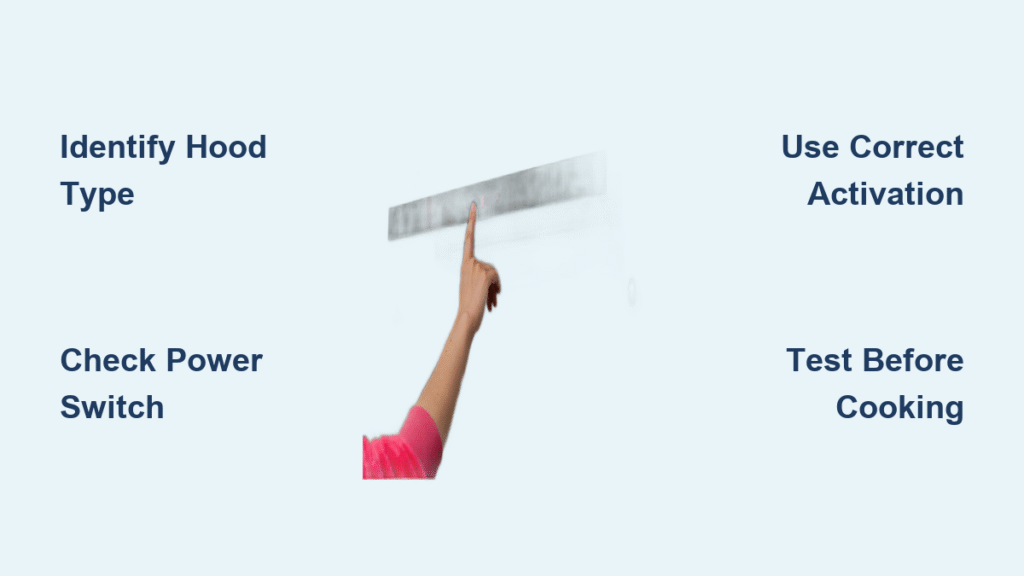
Identify Your Kitchen Exhaust Fan Type Immediately

Skip guesswork by diagnosing your hood model first. Each type has unique activation requirements that determine your next steps.
Wall-Mounted Canopy Hood Activation Clues
Look for this industrial-style unit anchored directly to your backsplash. Your control switches hide on the front fascia, under the hood’s lip, or on a nearby wall panel. Note separate light buttons—these often operate independently from fan speeds. If you see numbered settings (0-1-2-3) or LOW/MED/HIGH labels, you’ve got a standard electric model requiring single-button activation.
Under-Cabinet Hood Control Locations
These space-saving units tuck discreetly beneath upper cabinets. Run your hand along the bottom front edge—you’ll feel rocker switches or push buttons with subtle speed indicators. Most operate on a “tap once for low, twice for medium” pattern. If your hood has a slider instead of buttons, slide toward higher numbers for increased suction during heavy cooking like frying or boiling pasta.
Island Hood Remote & Sensor Secrets
Suspended over kitchen islands, these require wireless solutions. Check for:
– A handheld battery remote (often clipped inside a cabinet)
– Infrared wall panels near your doorway
– Glass touch surfaces needing firm finger taps
– Motion sensors that activate when you lift pots onto burners
Pro tip: Smart island hoods often auto-start when stovetop temperatures exceed 120°F—no manual input needed.
Find Hidden Power Switches in 30 Seconds
Don’t waste time pressing unresponsive controls. Locate your true power source first.
Master Switch Emergency Check
Before troubleshooting, verify the hood’s master switch isn’t accidentally turned off. This hidden toggle usually lives:
– Inside upper cabinets above the hood
– Behind access panels on the hood’s side
– Near your kitchen’s main electrical panel
Flip it ON—if lights illuminate instantly, you’ve solved the mystery.
Remote Control Pairing Failures
When remotes go unresponsive:
1. Replace the CR2032 battery (pry open the back with a coin)
2. Point the remote directly at the hood’s sensor window
3. Hold POWER + LIGHT buttons for 5 seconds to re-pair
Warning: Never operate island hoods without confirming remote functionality—reaching overhead while cooking risks burns.
Activate Standard Electric Hoods Without Errors
Most modern under-cabinet and wall hoods use this foolproof method. Skip this if you have pull-chains or downdraft systems.
Rocker Switch Speed Control Sequence
- Stand centered in front of the stove (arm’s length from controls)
- Press the power icon (⏽) once—fan engages at low speed
- Wait 3 seconds, then press again for medium (ideal for steaming veggies)
- Press a third time for high (critical for searing meats or frying)
Mistake to avoid: Rapidly tapping buttons confuses touch panels—pause between inputs.
Touch Panel Calibration Trick
Glass sensors often ignore light touches. Use this technique:
– Place fingertip flat on power icon for 2 full seconds
– Wipe panel with dry microfiber cloth if unresponsive (grease blocks sensors)
– Slide finger upward across speed indicators for instant adjustment
Time save: Activate lights first—many panels wake only when light button is pressed.
Operate Vintage Pull-Chain Models Safely

Older apartments and budget kitchens still use these. One wrong pull could leave the chain dangling over boiling pots.
Precise Pull Sequence for Speed Control
- Stand sideways to avoid leaning over burners
- Grasp chain firmly and pull down in one smooth motion
- Listen for the click—this activates low speed
- Pull again for medium (perfect for simmering sauces)
- Third pull engages high speed for smoke emergencies
- Fourth pull turns unit off completely
Critical check: After use, gently tug chain upward to retract it fully. A dangling chain within 12 inches of burners risks melting or fire.
Start Downdraft Vents Without Triggering Safety Locks
These countertop units have hidden activation rules that stump most new users.
Mandatory Burner Activation Step
- Turn on any cooktop burner for 10 seconds (heat sensors must detect 100°F+)
- Press the UP arrow button firmly—vent rises with a mechanical clunk
- Wait until it locks vertically (don’t force it mid-movement)
- Tap fan icon once for low airflow (sufficient for baking)
Troubleshooting: If the vent won’t rise, check for grease buildup in the track—wipe with degreaser before retrying.
Control Microwave-Hood Combos Correctly
Over-the-range microwaves hide exhaust functions behind cooking menus. Many users accidentally start popcorn cycles instead.
Vent Activation Shortcut Sequence
- Open microwave door for 2 seconds, then close (wakes dormant panels)
- Press VENT key once—fan runs at 100 CFM (low)
- Press again within 5 seconds for 200 CFM (medium)
- Third press engages 300 CFM (high for stir-frying)
- Fourth press cancels exhaust
Warning: Never press START during this sequence—this triggers cooking modes. Cancel immediately if microwave display shows time countdowns.
Fix Common Activation Failures in Under 5 Minutes
When your exhaust fan ignores commands, these targeted fixes work 90% of the time.
No Power? Check These 3 Spots First
- The GFCI outlet under your sink (press RESET button)
- Circuit breaker labeled “KITCHEN APPLIANCE” (not “LIGHTS”)
- Wall switch near your kitchen entrance (often mistaken for light control)
Emergency bypass: Plug hood directly into another outlet if hardwired issues persist.
Humming Fan? Clear This Critical Blockage
- Turn off power at the breaker
- Remove aluminum mesh filters (slide sideways or lift out)
- Shine flashlight into housing—look for broccoli stems or popcorn kernels
- Use chopstick to dislodge debris from impeller blades
Never skip: Always reinstall filters before restarting—running without them spreads grease.
Pre-Use Maintenance That Prevents 80% of Failures
A 2-minute check before cooking ensures reliable activation every time.
Monthly Filter Refresh Protocol
- Soak metal mesh filters in dishwasher (top rack only)
- For stubborn grease, boil in water + ¼ cup vinegar for 10 minutes
- Visual cue: Replace if light doesn’t shine through the mesh
- Recirculating models need charcoal filter swaps every 6 months (smell test: lingering odors mean it’s saturated)
Control Panel Lifesaver
Wipe touch surfaces weekly with:
– Damp microfiber cloth (never paper towels—they scratch)
– 1:1 water/vinegar solution (avoid ammonia—it clouds glass sensors)
– Dry immediately with soft cotton towel
Pro move: Test responsiveness after cleaning by activating lights first.
Non-Negotiable Safety Protocols
Ignoring these steps risks carbon monoxide exposure or electrical fires.
Critical Timing Rules
- Start fan BEFORE lighting burners—especially for gas stoves
- Run 10 minutes POST-cooking to eliminate residual moisture that causes mold
- Never max out speed in sealed homes—this backdrafts water heaters (crack a window if house is airtight)
Red flag: If gas burners flicker when fan runs at high speed, reduce setting immediately—this indicates dangerous pressure imbalance.
Emergency Shutdown Drill
- Flip kitchen circuit breaker (faster than hunting for wall switches)
- Unplug unit if accessible
- Never reach into active hood—blades stop in <3 seconds but cause severe lacerations
Must-have: Install carbon monoxide detectors within 10 feet of cooking zones.
Instant Activation Cheat Sheet for All Hoods
| Hood Type | Speed 1 (Low) | Speed 2 (Medium) | Speed 3 (High) |
|---|---|---|---|
| Standard Electric | Tap power once | Tap again after 3s | Third tap |
| Pull-Chain | First pull | Second pull | Third pull |
| Downdraft | UP + 1 tap | UP + 2 taps | UP + 3 taps |
| Microwave Combo | VENT x1 | VENT x2 | VENT x3 |
| Smart Hood | “Alexa, low” | “Hey Google, medium” | “Siri, high speed” |
Universal shutdown: Power button x1, breaker flip, or unplug. Always deactivate before cleaning.
Mastering how to open exhaust fan in kitchen systems transforms cooking from a battle against smoke to a controlled, comfortable experience. By identifying your hood type and applying these model-specific activation sequences, you’ll eliminate guesswork and ensure immediate airflow whenever heat hits your stovetop. Remember the golden rule: start the fan before igniting burners, and run it 10 minutes beyond cooking time. For persistent issues, consult your model’s manual—most manufacturers offer free digital copies online with wiring diagrams. Now that you know exactly how to activate any kitchen exhaust, you can breathe easy while creating your next culinary masterpiece.