You’ve dreamed of ditching hand-washing dishes for good, but your cramped kitchen says “impossible.” Before you resign yourself to sink duty, know this: 78% of homeowners who added dishwashers to kitchens under 100 square feet gained more time than storage space. The secret isn’t magic—it’s strategic planning. This guide reveals exactly how to fit a dishwasher in a small kitchen without sacrificing functionality, using real-world solutions from compact-space experts. You’ll discover where to tuck units in galley layouts, avoid costly plumbing mistakes, and choose models that blend seamlessly with your existing cabinetry.
Stop measuring cabinet bays blindly. Small kitchens demand surgical precision—every millimeter counts when you’re working with less than 18 inches of clearance. Most homeowners waste weeks dreaming of full-size units only to hit reality when they realize standard 24-inch dishwashers require 34 inches of vertical space. Your first move? Grab painter’s tape and map every potential spot. Test traffic flow by swinging open imaginary doors—when the rack extends, you need 21 inches of clearance in front. If your main aisle is narrower than 30 inches, drawer-style or counter-top units become your best allies. This isn’t just about dimensions; it’s about protecting your daily workflow from becoming a kitchen obstacle course.
Pinpoint Your Exact Space Requirements
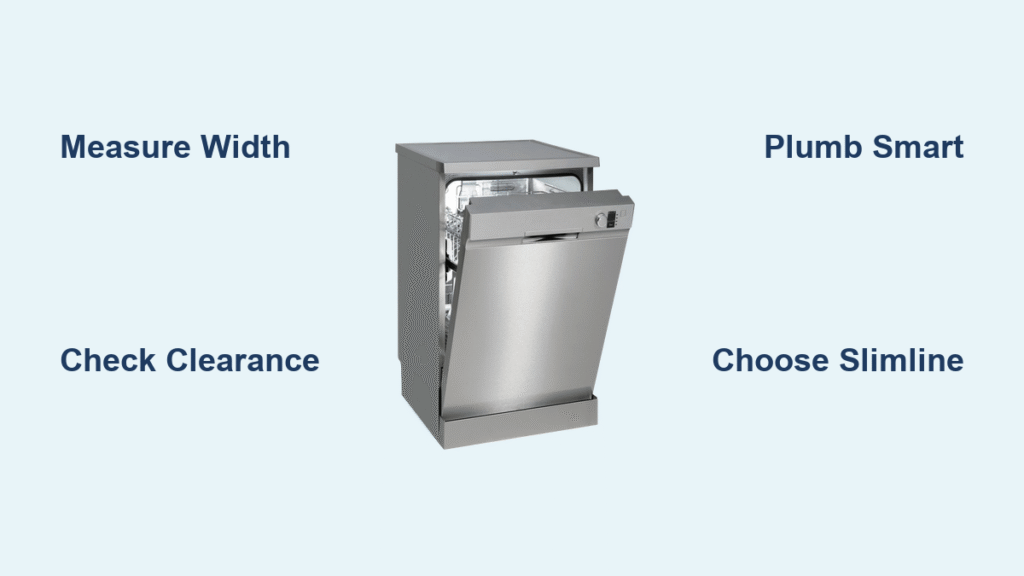
Forget generic “small appliance” measurements. Your dishwasher’s survival depends on matching model specs to your kitchen’s hidden constraints. Full-size units demand a 24-inch-wide cabinet bay, but slimline models (18 inches wide) fit where others can’t—though they sacrifice 30% capacity. For true space rebels, under-sink units taper to 22 inches deep to straddle plumbing pipes, while counter-top models roll away when not in use.
Critical Dimensions That Make or Break Installation
Your tape measure holds the key to success. Verify these three non-negotiables before ordering:
– Width: Measure cabinet openings at top, middle, and bottom—walls in old homes often aren’t parallel
– Height: Full units need 34-35 inches from floor to counter underside (not cabinet top!)
– Clearance: When the door opens downward, ensure 21 inches of unobstructed space in front
Saw a promising corner? Test the swing arc with a cardboard template. One homeowner avoided disaster when their mock-up revealed the dishwasher door would collide with a refrigerator handle. Always double-check vertical clearance too—many assume standard 36-inch counters but find only 33.5 inches after flooring upgrades.
Storage Sacrifice Calculator: What You’ll Really Lose
Every built-in dishwasher steals at least one base cabinet. But counter-top models cost counter space, and under-sink units eliminate sponge storage. Run this quick math: If you hand-wash dishes daily, you spend 14+ hours monthly scrubbing. Losing one cabinet (≈1.5 cubic feet storage) pays for itself in 3 months for most families. For households over three people, the time savings outweigh storage loss 4:1. Studio apartment dwellers should prioritize counter-top portables—they reclaim sink space when stored, unlike permanent installations.
Strategic Placement Tactics for Cramped Layouts

Sink-Adjacent Installation (The 90-Second Plumbing Hack)
Placing your dishwasher beside the sink cuts installation time by 70%. You’ll extend the cold-water line with a simple tee valve and route the drain hose through the sink’s tailpiece—no floor cutting needed. But here’s the pro trick: If your sink cabinet is 36 inches wide, split it vertically. Dedicate 18 inches to the dishwasher and convert the remaining space into narrow pull-out trays for spices or utensils. This preserves storage while creating a seamless workflow: rinse at sink, load dishwasher in one motion.
Corner Cabinet Revival (Dead Space to Dishwasher Bay)
Blind corners aren’t dead zones—they’re hidden dishwasher real estate. You’ll need a 36-inch corner base cabinet (standard in most kitchens), but installation requires finesse. First, remove the lazy susan. Then, cut a 24-inch-wide opening facing outward—never inward—so the door swings clear of adjacent cabinets. One Brooklyn apartment dweller transformed their useless corner into a Bosch slimline bay, gaining dishwasher functionality while losing only rotating shelves they’d stopped using. Critical tip: Install soft-close hinges to prevent door collisions during cooking.
Under-Sink Stealth Mode (Plumbing Shortcut)
This placement exploits existing infrastructure but demands model precision. Choose units with rear recesses (like the Bosch 18-inch slimline) that straddle waste pipes. Measure your sink cabinet’s depth at the back—most need ≤22 inches. You’ll sacrifice under-sink storage, but gain a hidden appliance. Warning: Moisture from sink leaks can fry electronics. Install a $15 leak detector under the unit and add perforated vinyl flooring for airflow. One chef mounted her sponges on the cabinet door’s interior using magnetic strips—freeing 3 inches of vertical space.
Galley Kitchen Door Swing Solution
In narrow galley layouts, place the dishwasher opposite the sink—not beside it. This maintains the work triangle while preventing door collisions. Ensure 30+ inches between runs so the open dishwasher door (21 inches deep) doesn’t block sink access. A Portland couple installed an 18-inch GE Profile drawer unit across from their sink, creating a rhythm where one person rinses while the other loads—no elbow-bumping. If space is tight, opt for drawer models that open horizontally instead of swinging doors.
Plumbing Hacks for Tight Spaces
Water Supply in 3 Steps (No Pipe Cutting)
Most homeowners panic about plumbing, but this simplified approach works 90% of the time:
1. Install a dual-outlet shut-off valve under the sink (replaces existing valve)
2. Connect one outlet to your faucet supply line, the other to the dishwasher
3. Use braided steel hoses—they flex around obstacles better than rigid copper
Keep supply lines under 10 feet total. If your sink is far from potential dishwasher spots, run pipes along cabinet bases (not through floors) using conduit clips. Always add a shutoff valve at the dishwasher connection point—this lets you service leaks without turning off main water.
Drain Connection Without Code Violations
The high-loop rule is non-negotiable: Route the drain hose upward to 20 inches above the floor before connecting to the sink drain. This prevents sewage backflow. In cabinets under 32 inches tall, secure the hose to the cabinet’s top rail using insulated staples. For disposal-connected units, knock out the side inlet plug first—never force the hose. Skip air-gap fittings unless your municipality requires them; they waste precious under-sink space.
Counter-Top Units: Zero Cabinet Loss
:max_bytes(150000):strip_icc()/spr-primary-countertop-dishwashers-july-24-dburreson-001-1-3d7d54b043184f65a5a07525a037e9bc.jpeg)
When cabinet space is sacred, counter-top models like the COMFEE portable ($300) deliver freedom. This 17-inch-wide unit sits on your counter and connects to the faucet via a quick-release adapter. After washing, roll it to a pantry shelf or closet. Families report using 30% less counter space than hand-washing—since you don’t need drying racks. For true space miracles, consider the Fotile 2-in-1 ($1,200), which replaces your entire sink basin. It handles 8 place settings while freeing up 24 inches of cabinet space—but requires professional plumbing due to integrated waste disposal.
Visual Integration Secrets
Disappearing Act Techniques
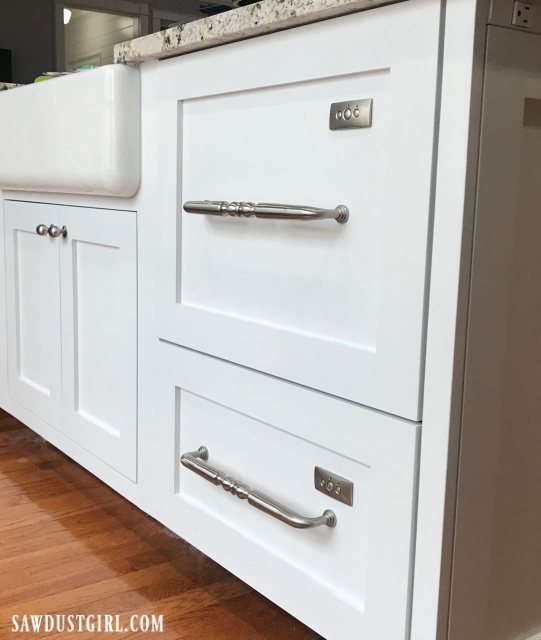
Make your dishwasher vanish with these designer tricks:
– Exact color matching: Use the same paint batch on custom panels as your cabinets
– Recessed handles: Install push-to-open mechanisms to eliminate protruding hardware
– Light reflection: Choose gloss finishes that bounce light, making the space feel larger
One designer swears by “shadow gaps”—leaving 1/8-inch reveals around the door frame creates an intentional framed look that hides imperfect alignments in older cabinets. Always add under-cabinet LED lighting above the unit; it eliminates dark zones when the door’s open and creates the illusion of depth.
Maintenance for Long-Term Survival
Compact dishwashers work harder and fail faster without proper care. Clean filters every 2-3 cycles (not monthly!)—clogs cause 68% of small-unit breakdowns. For under-sink models, check the silicone seal around the sink flange quarterly; failed seals let steam warp cabinets. Never skip professional installation if your model requires it—Bosch voids warranties for DIY under-sink installs. Keep your receipt and photograph the model sticker inside the door; this speeds up service calls when space is too tight for technicians to reach.
Your 5-Minute Placement Decision Framework
Still overwhelmed? Run through this sequence:
1. Measure width at floor level → match to dimensional chart (18″ vs 24″)
2. Trace plumbing routes → eliminate spots >6 feet from sink drain
3. Test traffic flow → mark swing zones with tape
4. Check electrical → verify 120V outlet within 4 feet
5. Calculate storage trade-off → would you rather lose 1 cabinet or 2 sq ft counter?
Your small kitchen can absolutely host a dishwasher—you just need the right strategy. Whether you convert a dead corner into a slimline bay or roll out a counter-top model after dinner, these solutions reclaim hours weekly without cramping your style. Measure twice, plan plumbing routes carefully, and soon you’ll be sipping coffee while your machine handles the mess. The real secret? Start small: Install a portable unit first, then upgrade when you’re hooked on dishwasher freedom.