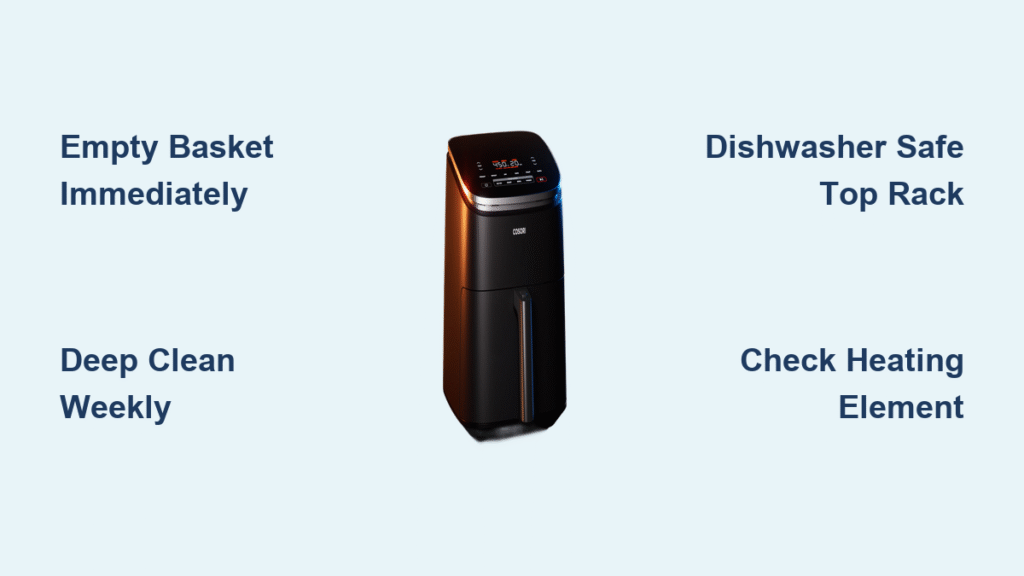
Your Cosori air fryer transforms frozen fries into golden perfection and chicken wings into crispy delights—but that magic comes with a hidden cost. Grease splatters accumulate in hidden crevices, clogging airflow vents and creating stubborn burnt odors that taint your next meal. When food residue builds up around the heating element, it forces your appliance to work harder, wasting energy and shortening its lifespan. Learning how to clean your Cosori air fryer properly isn’t optional maintenance—it’s essential for preserving that restaurant-quality crispiness while preventing smoke alarms from ruining dinner.
Ignoring regular cleaning turns your healthy cooking hero into a fire hazard waiting to happen. Sticky oil pools on the crisper plate, causing uneven cooking that leaves some bites raw while others char. Worse yet, trapped moisture breeds mold in the basket’s corners, silently contaminating your food. This guide delivers battle-tested methods straight from Cosori’s engineering specs—no guesswork, no damage risks. You’ll discover exactly which parts survive the dishwasher, how to banish that burnt smell in 10 minutes, and why your parchment paper could ignite if placed wrong.
Empty Debris Immediately After Cooking
Never walk away while components are warm—that’s when cleaning becomes effortless. As soon as your cooking cycle ends, unplug the unit and remove the basket while it’s still warm (but not hot enough to burn you). Shake it vigorously over your trash can to dislodge loose crumbs and seed fragments that would harden into concrete-like residue. For stubborn bits stuck in the crisper plate’s ridges, use a dry paper towel folded into a tight point to scrape without scratching.
Prevent Overnight Grease Solidification
Grab a microfiber cloth dampened with warm water—no soap needed here. Wipe the basket’s interior surface while residual heat softens the oil. This 30-second habit stops grease from congealing into a sticky mess that requires aggressive scrubbing later. Pay special attention to the bottom corners where drippings pool; these spots become odor factories if neglected. Always dry immediately with a second clean cloth to prevent water spots on the nonstick coating.
Deep Clean Basket and Crisper Plate Weekly
Skip the overnight soak myth—15 minutes is all you need for effortless cleaning. Fill your sink with warm water (not hot, which warps components) and add two drops of mild dish soap. Submerge the basket and crisper plate, letting them sit while you tackle other kitchen tasks. After the timer dings, the grease lifts away with gentle wiping. For caramelized sugar residue from sweet glazes, add one tablespoon of baking soda to the water—it neutralizes acidity without abrasion.
Eliminate Hidden Grease Pockets
Use a soft-bristled toothbrush (never nylon or metal) to reach the crisper plate’s ventilation holes. These tiny channels funnel hot air upward, and when clogged, they cause uneven cooking. Work the brush in circular motions around each hole, then rinse under warm running water. Check the basket’s handle crevice with a cotton swab—this shadowy spot traps oils that create rancid smells during preheating. Air-dry both components upright on a rack for 20 minutes before reassembly.
Dishwasher Safety Decoded
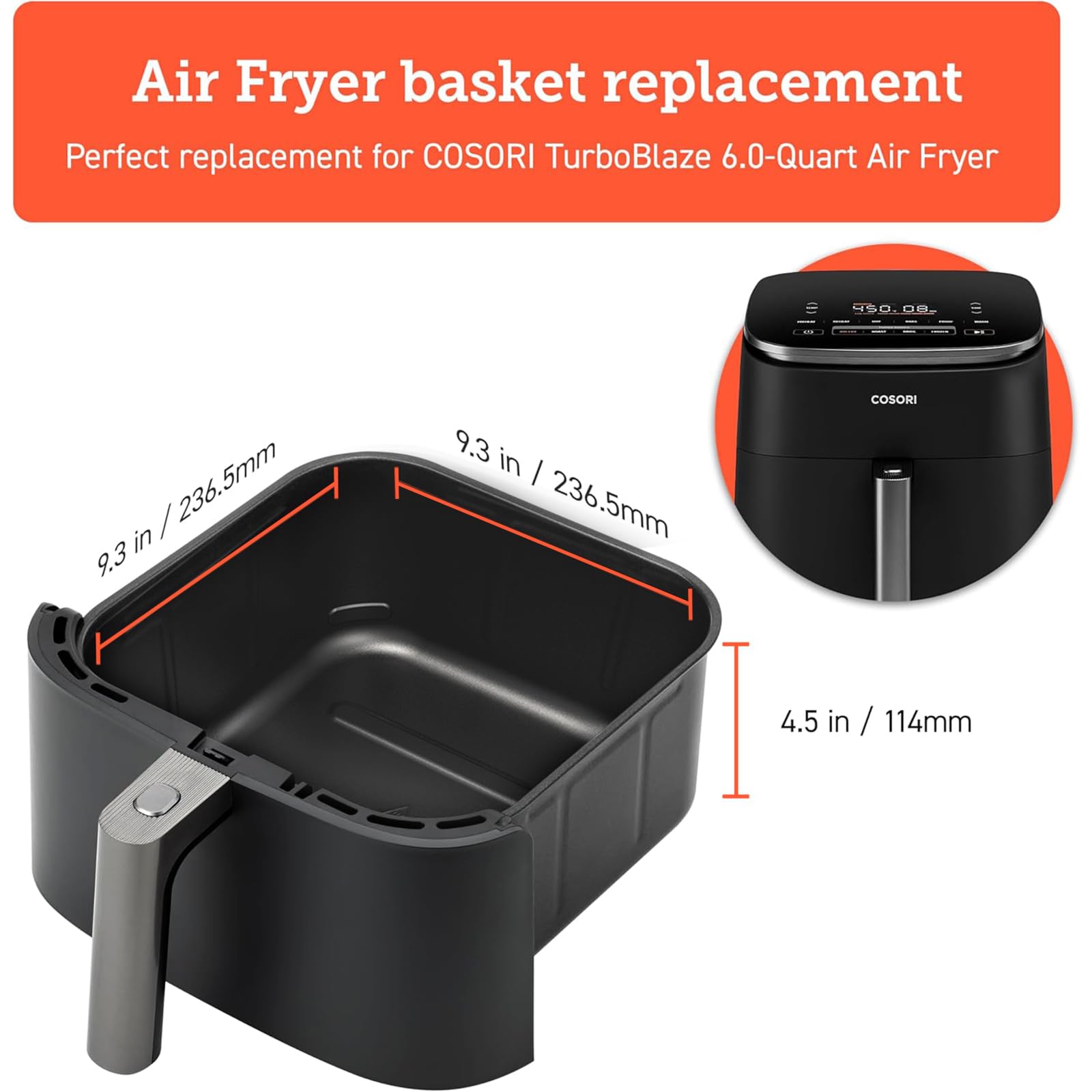
Top-rack placement is non-negotiable for Cosori components. Position the basket upside down on the upper rack, ensuring it doesn’t touch dishwasher walls or utensils. Why? The heating element during drying cycles can warp plastic if components shift too close. Run a normal cycle with standard detergent—no “heavy duty” settings that blast coatings with excessive pressure. Immediately remove parts post-cycle to avoid steam-induced water spots, then hand-dry any moisture in the control panel grooves with a microfiber cloth.
When Hand-Washing Beats the Dishwasher
Choose manual cleaning when:
– You’ve cooked sticky sauces or sugary marinades
– The basket shows early signs of coating wear
– You need components ready for immediate reuse
Use only silicone-tipped tongs to handle hot parts during cleaning—metal utensils create microscopic scratches that accelerate coating failure. For baked-on cheese residue, make a paste of equal parts baking soda and water. Apply with a soft sponge, wait five minutes, then wipe in one-direction strokes to avoid swirl marks.
Monthly Heating Element Maintenance

Ignition risks hide in plain sight around the heating coil. Unplug the unit and let it cool 45 minutes minimum. Shine a flashlight upward into the chamber—you’ll spot charred food particles clinging to the coil housing. These ignite during preheating, causing smoke that triggers alarms. Dip a cotton swab in white vinegar, squeeze out excess liquid, and gently roll it along the coil’s base. Never spray liquids directly—moisture seeping into electrical contacts causes permanent damage.
Ventilation System Inspection
Remove the rear access panel (consult your manual for location) to check the cooling fan blades. Food crumbs here reduce airflow by 40%, extending cooking times. Use compressed air in short bursts to dislodge debris, holding the fan steady with a toothpick to prevent overspinning. If you hear grinding noises during operation, tiny bone fragments may be lodged—power off immediately and inspect.
Liner Safety Protocols That Prevent Fires
Parchment paper requires military precision to avoid disasters. Cut circles exactly matching your basket’s diameter using a template—Cosori’s engineers confirm even 1/8-inch overhang risks contact with the 400°F heating element. Always place food directly on the liner; an empty sheet can lift and ignite. For wings or fries, skip liners entirely—direct air exposure creates the crispiness you paid for. If using foil for fatty ribs, crumple it first to eliminate smooth surfaces that blow upward when the fan activates.
When Liners Sabotage Performance
Avoid all liners for:
– Frozen french fries (traps steam, causing sogginess)
– Light vegetables like broccoli florets (they lift and burn)
– High-heat recipes above 375°F (paper degrades rapidly)
Test airflow by running an empty basket at 400°F for two minutes. If you hear paper rattling or see foil shifting, your liner is too loose—reposition before adding food.
Burnt Smell Emergency Protocol
Don’t restart the air fryer when smoke appears—that’s burning residue entering your food. Unplug immediately and let it cool completely. For persistent odors after standard cleaning, mix 1 cup water with 2 tablespoons lemon juice in a microwave-safe bowl. Place it in the basket and run at 350°F for 8 minutes. The steam lifts embedded oils while citrus neutralizes smells. Wipe dry with a vinegar-dampened cloth—this acid cuts through stubborn smoke compounds dish soap misses.
Restore Nonstick Coating in 5 Minutes
When food sticks despite oiling, the coating is compromised. After thorough cleaning, apply 1/2 teaspoon of avocado oil (high smoke point) to the basket. Run empty at 325°F for 5 minutes to polymerize the oil into a protective layer. Never use cooking spray—propellants leave gummy residue that accelerates sticking. Test with potato wedges; if they release cleanly, the coating’s integrity is restored.
Storage Habits That Extend Lifespan
Moisture is your air fryer’s silent killer. After final drying, store the basket slightly ajar inside the main unit—this prevents condensation buildup in the crisper plate’s drainage holes. If cabinet space is tight, stand the basket vertically against a wall with the handle up. For long-term storage, wrap the cord loosely around the base (never tight loops that crack insulation) and cover with a cotton pillowcase—not plastic, which traps humidity.
Warning Signs You’re Cleaning Wrong
Stop immediately if you see:
– Rainbow sheen on the basket (chemical damage)
– Peeling black flakes in food (coating failure)
– Persistent white residue after rinsing (soap buildup)
These indicate irreversible damage from abrasive cleaners. Replace affected parts—Cosori sells individual crisper plates at 30% of new-unit cost.
Mastering how to clean your Cosori air fryer transforms it from a greasy chore into your most reliable kitchen ally. Daily debris removal prevents 90% of performance issues, while monthly heating element checks eliminate fire risks lurking in plain sight. Remember: dishwasher use is safe only when components stay top-rack positioned, and parchment paper requires surgical precision to avoid ignition. Implement these protocols consistently, and your air fryer will deliver crispy perfection for 5+ years—no smoke alarms, no sticky messes, just golden results every time. Start tonight by wiping that warm basket—you’ll taste the difference tomorrow.