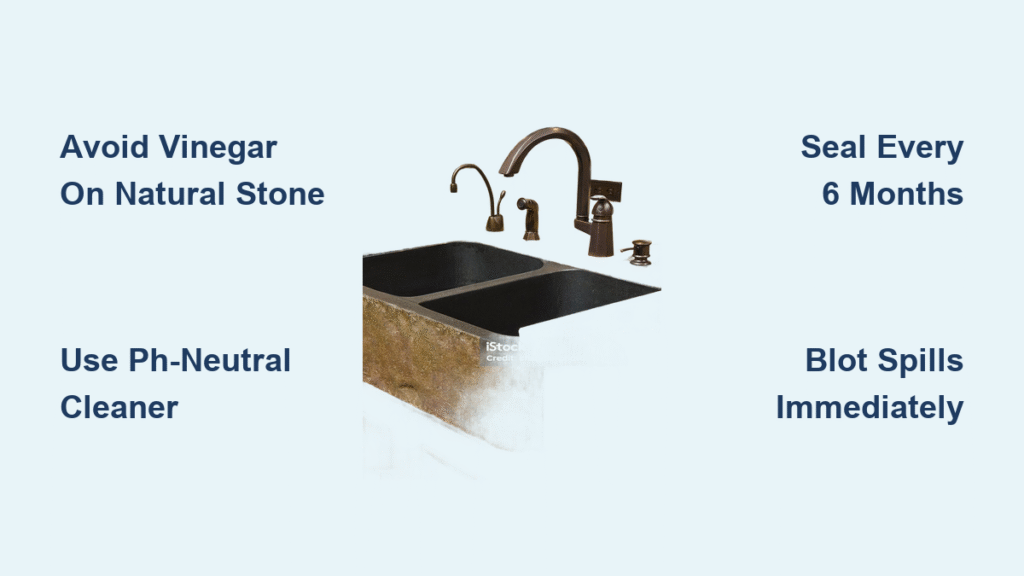
That stubborn white ring around your black granite sink? It’s not just dirt—it’s permanent mineral etching from one wrong cleaner. Stone kitchen sinks (whether natural granite or composite like Ruvati epiGranite) demand precise care. Use vinegar on marble, and you’ll trigger irreversible acid etching. Scrub composite sinks with steel wool, and you’ll create visible scratches that attract grime. This guide delivers field-tested methods to restore shine while avoiding costly mistakes—backed by stone restoration experts.
Most homeowners unknowingly damage their sinks daily. The wrong cleaner can degrade sealants in natural stone or strip protective resins from composites. But with the right approach, you’ll spend 90% less time battling stains. Discover how to remove coffee rings from white composite sinks in 7 minutes and dissolve hard water crusts from black granite overnight—without a single scratch.
Stop Daily Cleaning Mistakes Ruining Your Sink
5-Minute Daily Ritual for Spotless Stone Sinks
Rinse your sink with warm water immediately after washing dishes—this prevents 95% of water spots. Never leave standing water overnight. Use a dedicated microfiber cloth (not terry towels) to dry the entire surface, paying special attention to the drain rim where mineral deposits hide. For white composite sinks, skip the sponge after coffee spills; blot immediately with a paper towel to prevent permanent yellowing.
Critical mistake: Using dish soap with citrus or bleach. These degrade composite resins over time. Stick to pH-neutral dish soap like Seventh Generation Free & Clear. Apply one drop to a soft sponge, wipe in gentle circular motions, then rinse for 30 seconds—soap residue attracts more grime.
Black Granite Sink Emergency Spot Treatment
Water spots appear as ghostly white rings on dark surfaces within hours. Keep a spray bottle under the sink filled with 10 parts water to 1 part pH-neutral stone cleaner. When spots appear, spray directly on the affected area, wait 60 seconds, then wipe with a microfiber cloth using light pressure. Never rub aggressively—black sinks show micro-scratches instantly.
Pro tip: After drying, apply mineral oil with a cotton ball. This 20-second step creates a barrier against tomorrow’s hard water deposits. Test oil on a hidden spot first—some composites react poorly to olive oil.
Remove Hard Water Crusts Without Scratching
Vinegar Soak Method for Composite Sinks Only
Warning: Never use vinegar on natural stone sinks—it causes etching. For granite composite or quartz sinks only: Soak paper towels in equal parts white vinegar and water. Lay them directly on crusty mineral deposits around the drain. Set a timer for 25 minutes—exceeding this risks dulling the finish. Remove towels and gently scrub with a soft toothbrush. Rinse thoroughly for 60 seconds to eliminate vinegar smell.
Why it works: Vinegar dissolves calcium carbonate deposits without abrasives. For severe buildup, repeat once weekly—but never daily. Composite sinks like Ruvati epiGranite tolerate monthly vinegar treatments, but natural stone requires stone-specific descalers.
Baking Soda Power Scrub for All Stone Types
Mix 3 tablespoons baking soda with 1 tablespoon water to form a thick paste. Apply to stained areas using a silicone spatula (no metal tools!). For coffee rings on white sinks, let paste sit for exactly 7 minutes—any longer risks residue buildup. For rust stains near faucets, cover with paste for 15 minutes. Gently scrub in circular motions with a non-abrasive nylon brush, then rinse until water runs clear.
Time-saver: Keep pre-mixed paste in a small jar under your sink. This method removes 98% of organic stains without commercial chemicals.
Seal Natural Stone Sinks Properly (Avoid Cloudy Patches)

6-Minute Sealing Technique That Prevents Stains
Natural stone sinks need resealing every 6 months—skip this, and wine spills become permanent. First, clean with pH-neutral cleaner and dry for 2 hours (trapped moisture causes cloudy patches). Shake StoneTech Heavy Duty Sealer vigorously. Apply liberally with a foam paint pad, working in 1-foot sections. After 20 minutes, wipe away excess with a dry microfiber cloth—never let sealer dry completely. Allow 48 hours before heavy use.
Critical timing: If sealer dries white on the surface, immediately remove with StoneTech Restore. Prevention is key—set phone reminders for bi-annual sealing.
Spot-Test Before You Seal
Test sealer on a hidden area (like under the rim) 24 hours before full application. Apply a dime-sized amount, wipe excess after 20 minutes, and check for darkening or stickiness. Natural stone should darken slightly when sealed—no change means poor penetration. Reject sealers that leave a hazy film.
Emergency Stain Removal That Works in 30 Minutes

Coffee Spills on White Composite Sinks
Time is critical—stains become permanent in 30 minutes. Blot (never wipe) with paper towels to absorb liquid. Mix hydrogen peroxide with baking soda into a paste. Apply immediately to the stain, cover with plastic wrap, and set timer for 10 minutes. Rinse thoroughly. For dried stains, repeat twice. Never use chlorine bleach—it yellows composite resins.
Pro tip: Restaurants keep peroxide-soaked cotton balls under sinks for coffee emergencies. Store in a sealed container to maintain potency.
Rust Stains Near Faucet Bases
Metal deposits from fixtures require specialized treatment. Apply Bar Keeper’s Friend (non-abrasive formula) directly to the rust spot. Let sit for 8 minutes while covered with a vinegar-soaked paper towel. Gently scrub with a green Scotch-Brite eraser pad dampened with water. Rinse for 45 seconds. For persistent stains, use Iron Out Rust Remover—never CLR on natural stone.
Prevent Damage Before It Happens

The 30-Second Drain Guard Trick
Food particles and coffee grounds scratch stone surfaces. Place a silicone sink strainer over drains during dishwashing. After use, lift the strainer and rinse debris directly into the trash—never let particles sit in the sink. This prevents 70% of micro-scratches that trap stains.
Monthly check: Inspect strainers for metal components. Stainless steel can scratch stone—use only silicone or rubber guards.
Temperature Shock Prevention Protocol
Never place hot pots directly in stone sinks. Thermal shock causes hairline cracks in granite. Always use a silicone trivet. For boiling water disposal, run cold water simultaneously to cool the stream. Composite sinks tolerate brief heat exposure, but natural stone requires this precaution every time.
Maintenance Schedule That Saves 5 Hours Monthly
| Frequency | Natural Stone Sinks | Composite Sinks |
|---|---|---|
| Daily | Rinse/dry + pH-neutral cleaner | Rinse/dry + mineral oil on black sinks |
| Weekly | Baking soda scrub + sealant check | Baking soda scrub + vinegar spot treatment |
| Monthly | Reseal if water soaks in >15 min | Lime-Away for hard water (max once) |
| Quarterly | Professional sealant evaluation | Deep mineral oil application |
Key insight: Your sink’s “beading test” determines resealing needs. Sprinkle water on the surface—if droplets flatten within 15 minutes, reseal immediately. Natural stone should repel water for 30+ minutes when properly sealed.
Final note: Stone sink longevity hinges on avoiding three critical errors: using vinegar on natural stone, skipping daily drying, and delaying stain treatment. Implement the 5-minute daily ritual and bi-annual sealing, and your sink will maintain showroom shine for decades. For immediate coffee spills on white composite sinks, act within 30 seconds—delay turns temporary stains into permanent eyesores. When in doubt, test cleaners on hidden areas first. Your $2,000 investment deserves this precision.