Standing at your kitchen sink with a broken faucet or planning a remodel, you face a wall of choices that can overwhelm even confident homeowners. Chrome or brass? Pull-down or pull-out? Single-handle or dual? The right faucet transforms daily tasks from frustrating to effortless, while the wrong choice leads to years of splashing, leaking, and regret. Understanding how to choose a kitchen faucet properly saves you money, time, and daily frustration.
This guide cuts through the confusion with precise steps to match your specific needs, existing setup, and budget. You’ll learn exactly what to measure, which features matter, and how to avoid expensive mistakes—all without drowning in technical jargon. Get ready to make a decision that will serve you well for the next decade or more.
Check Your Sink Configuration Before Shopping
Count Existing Holes to Avoid Compatibility Issues
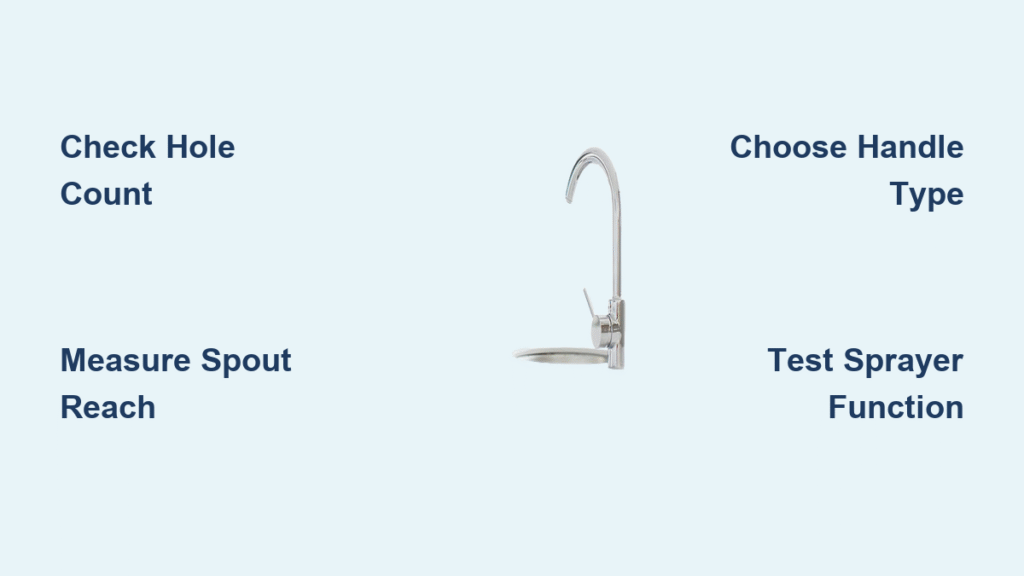
Walk to your sink and look behind the faucet. You’ll see 1-4 pre-drilled holes in your countertop or sink deck. Single-hole setups work with modern single-handle faucets. Three holes indicate traditional two-handle designs. Four holes accommodate bridge faucets or separate sprayers.
Critical mistake to avoid: Don’t assume all sinks have the same hole pattern. Measure before you shop or risk returning a beautiful faucet that won’t fit your setup. If you’re switching from three holes to one, buy a matching escutcheon plate to cover the unused openings seamlessly—this costs $15-30 but looks far better than visible holes.
Measure Critical Dimensions That Determine Fit
Grab a tape measure and record these four numbers before shopping:
– Spout reach: Distance from faucet base to sink center (aim for 8-10 inches)
– Vertical clearance: Space from deck plate to bottom of upper cabinets
– Sink depth: Measure from rim to basin bottom
– Hole spacing: Center-to-center distance between existing holes (standard is 4 or 8 inches)
These measurements prevent buying a beautiful faucet that won’t fit or function properly. A high-arc spout looks stunning but becomes useless if it hits your cabinets during use.
Pick Your Mounting Style Based on Kitchen Layout
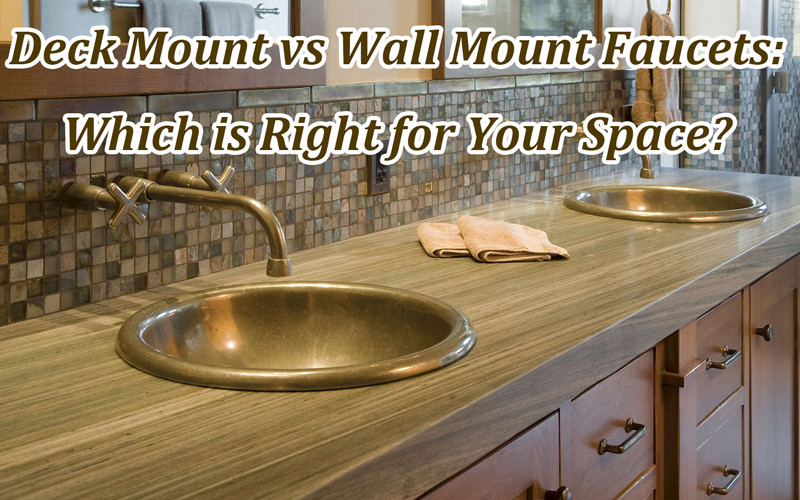
Deck-Mount vs Wall-Mount Installation Options
Deck-mount faucets dominate residential kitchens, installing directly on your countertop or sink edge. They offer the widest selection and simplest installation—perfect for replacements. Expect to spend 1-2 hours for DIY installation if replacing an existing faucet.
Wall-mount faucets create stunning visual impact and free counter space, but require plumbing lines inside your walls. Choose this only during major renovations or new construction when walls are open. Professional installation typically costs $300-600 more than standard deck mounts.
Spout Height Trade-Offs for Daily Functionality
High-arc (gooseneck) spouts at 8-10 inches handle stock pots and large platters with ease. The dramatic sweep adds visual weight—ideal for spacious kitchens with deep sinks. If you regularly wash large pots, this height is non-negotiable.
Low-arc spouts at 3-5 inches prevent splashing in shallow sinks and fit under low cabinets. They’re perfect for compact kitchens or galley layouts where space is limited. Consider your primary tasks: frequent pot filling demands height, while daily dishwashing works fine with lower profiles.
Choose Handle Configuration for Daily Convenience
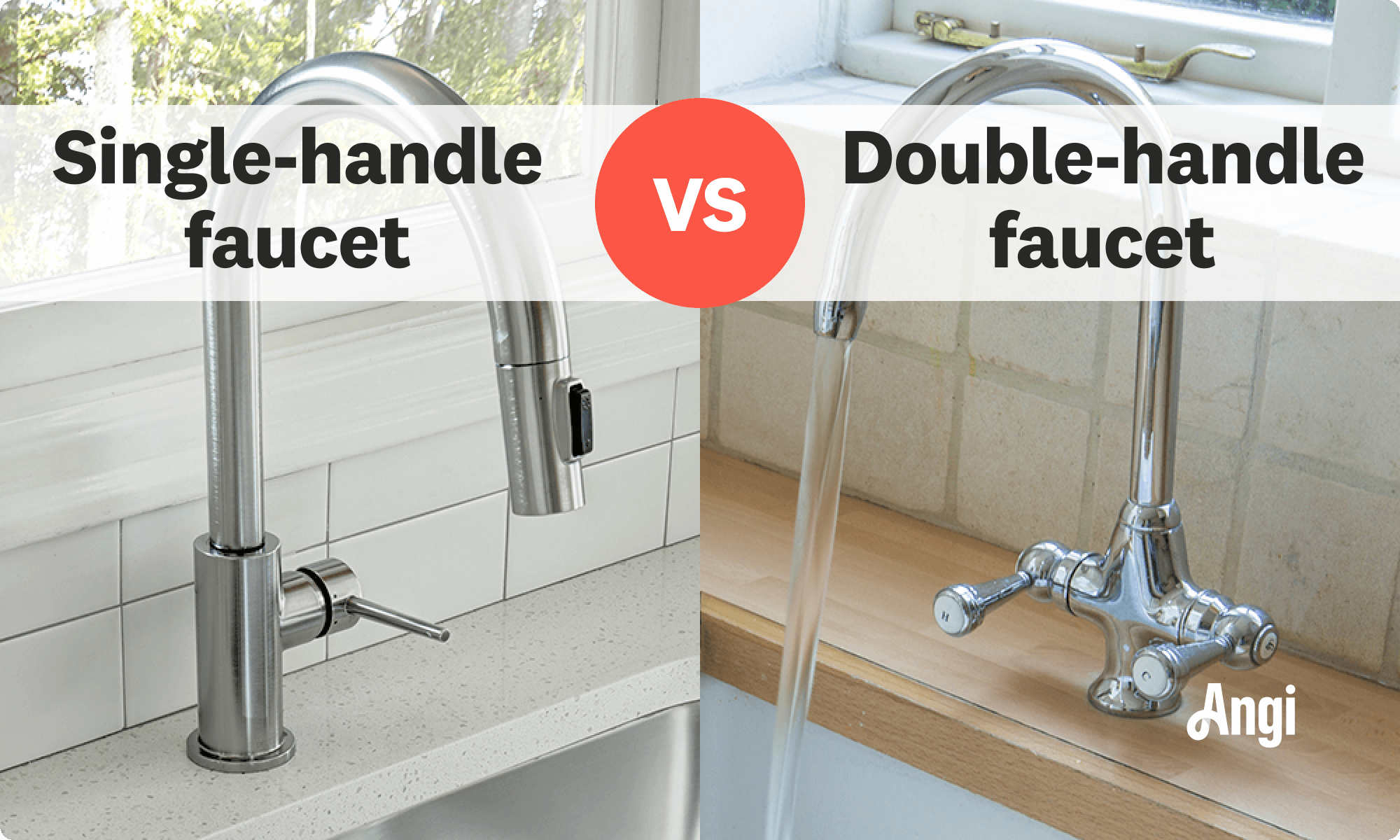
Single vs Double Handle Operation Differences
Single-handle faucets dominate modern kitchens for good reason. One motion controls both temperature and flow—crucial when hands are messy. They’re easier for children and ideal for smaller sinks. You’ll appreciate this convenience when your hands are covered in raw meat juices.
Two-handle faucets offer precise temperature control and traditional styling. The separate hot/cold controls appeal to users who prefer classic aesthetics or need exact water temperatures for specific tasks. They require more space but provide better temperature accuracy for delicate cooking tasks.
Select Sprayer Functionality That Matches Your Cooking Style
Pull-Down vs Pull-Out Sprayer Performance
Pull-down sprayers integrate into high-arc spouts, pulling straight down for powerful rinsing. The weight of the sprayer helps it retract smoothly—excellent for deep sinks and large items. Test the magnetic docking in stores; weak magnets lead to droopy sprayers that won’t retract properly.
Pull-out sprayers feature lower profiles that pull horizontally toward you. The longer hose reaches countertops and secondary sinks—perfect for filling pots on adjacent surfaces. If you have a small sink but need to fill large pots, this design solves your space constraints.
Understand Valve Technology for Long-Term Reliability

Ceramic Disc vs Cartridge Valve Durability
Ceramic disc valves use two ceramic plates that rotate against each other for drip-free operation. They’re the gold standard—last 20+ years with minimal maintenance, justifying their higher cost. When shopping, look for brands advertising “diamond-sealed” technology for maximum longevity.
Cartridge valves offer reliable quarter-turn operation with replaceable components. When they eventually wear, you swap the cartridge instead of the entire faucet—balancing longevity with repairability. This design typically requires maintenance every 5-7 years depending on water quality.
Avoid compression valves with rubber washers unless restoring period homes—they’re outdated technology requiring regular washer replacement. You’ll spend more time fixing leaks than cooking.
Evaluate Smart Features Worth the Investment
Touchless Operation Practicality
Motion sensors activate water flow with a simple wave—revolutionary when handling raw chicken or sticky dough. Voice activation adds precise measurement dispensing (“dispense 8 ounces”), perfect for baking. However, these features require electrical connections or batteries that need changing every 1-2 years.
Critical consideration: Power outages disable functionality unless you choose models with manual override. If you experience frequent outages, prioritize mechanical reliability over smart features.
Pick Your Finish for Style and Practicality
Popular Options Compared for Real-World Use
Stainless steel resists fingerprints and matches modern appliances seamlessly. It’s the safe choice for contemporary kitchens but may show scratches over time on high-use areas.
Chrome offers classic appeal at the lowest price point. The highly reflective surface shows every water spot—budget for frequent cleaning if you choose this finish. It’s the most affordable option but requires the most maintenance.
Matte black creates dramatic contrast against light countertops. It hides water spots but can scratch more easily than metal finishes. If you have hard water, consider this finish carefully as mineral deposits show more prominently.
Plan Installation Approach That Saves Time
DIY vs Professional Installation Scenarios
Standard replacements typically take 1-2 hours with basic tools. You’ll need a basin wrench, plumber’s putty, and Teflon tape. If your existing faucet has standard connections and you’re replacing with a similar configuration, this is a manageable weekend project.
Complex installations involving new holes, wall-mounting, or smart features may require professionals. Factor $200-500 for professional installation if your project involves electrical work for touchless features or custom plumbing modifications.
Budget for Value That Lasts
Price Tiers That Actually Deliver Quality
Mid-range ($150-400): Solid brass construction, ceramic disc valves, 5-10 year warranties. This sweet spot balances quality with affordability for most homeowners. You get reliable performance without luxury pricing.
Premium ($400-800): Full brass bodies, advanced finishes, lifetime warranties. Expect 15-20 years of reliable service. The PVD (Physical Vapor Deposition) coating on premium finishes resists corrosion and maintains appearance for decades—worth the upcharge for busy households.
WaterSense labeled faucets reduce water usage by 20%—saving $50+ annually on utility bills. Quality faucets also increase home resale value significantly, making them a smart investment beyond daily convenience.
Make Your Final Decision Confidently
Create Your Priority List to Narrow Options
Rank these factors from 1-5 based on your needs:
1. Function (must match your cooking style)
2. Fit (must work with existing setup)
3. Style (must complement your kitchen)
4. Features (nice-to-have additions)
5. Budget (balance upfront cost with longevity)
Most homeowners prioritize function and fit first—no matter how beautiful a faucet looks, it’s useless if it doesn’t work with your sink configuration or cooking habits.
Test Before Buying to Avoid Regret
Visit showrooms to test handle operation and sprayer feel. Online reviews reveal long-term durability—focus on 2+ year updates from actual users rather than initial impressions. Pay attention to complaints about stiff handles or sprayers that don’t retract properly—these become daily frustrations.
Pro tip: Check return policies before ordering online. You’ll need 2-4 weeks to evaluate fit and finish in your actual kitchen lighting. Many retailers require original packaging for returns, so keep everything intact until you’re certain.
The perfect kitchen faucet balances your specific needs with long-term reliability. Measure twice, choose once, and enjoy years of effortless operation that makes daily tasks genuinely pleasant. Your ideal faucet isn’t about the most features or highest price—it’s the one that fits your sink, matches your cooking style, and operates smoothly day after day. With these guidelines, you’re now equipped to make a confident choice that serves you well for years to come.