
You’re standing at the sink, plate in hand, ready to dump food scraps into your kitchen dispenser—only to hear silence when you flip the switch. Or worse: that ominous hum with no grinding action. Water starts backing up as dirty dishes pile higher. Before you panic or call for expensive help, take a breath. Over 90% of “kitchen dispenser not working” emergencies are solvable with basic tools and these exact steps. This guide cuts through the noise with a systematic, safety-first approach to revive your garbage disposal—no plumber required. You’ll learn precisely what’s jamming your unit, how to diagnose power failures in 60 seconds, and crucial mistakes that could destroy your appliance. Let’s get your sink flowing again.
No Power When Switch Flips: The Silent Disposal
If your kitchen dispenser not working shows zero response—not even a hum—start with the simplest fixes. Most “dead” disposals fail due to overlooked power issues, not internal damage.
Confirm Power Connections and Reset the Overload Protector
First, check the disposal’s plug under the sink. Vibration from daily use often loosens it. Push firmly until you feel it seat completely. Next, locate your electrical panel and identify the breaker labeled “disposal” or “kitchen.” Flip it fully off, then back on—don’t just toggle it. If power returns but the unit dies immediately, your overload protector tripped. This dime-sized red button (on the unit’s bottom or back) shuts off power during motor stress. Here’s the reset sequence:
- Turn the wall switch OFF (critical safety step)
- Press and hold the red reset button for 5 seconds until it clicks in
- Wait 5 minutes for the motor to cool
- Restore power and test with cold water running
Pro tip: If the reset button pops out instantly after pressing, do not keep resetting it. This signals serious electrical faults or motor burnout—proceed to jam checks next.
Motor Humming But Blades Stuck: Unjamming Safely
That low hum means power reaches the motor, but something’s wedged in the grinding chamber. Forcing operation risks permanent damage. Never reach inside—even with power off.
Identify Common Jam Culprits and Clear Obstructions
Fibrous foods like celery, corn husks, or potato peels are top jamming offenders. Metal utensils, fruit pits, or bones also frequently cause this “kitchen dispenser not working” scenario. Always cut power first at the plug or breaker before proceeding.
Manual Unjamming: Hex Key Method (Works 95% of the Time)
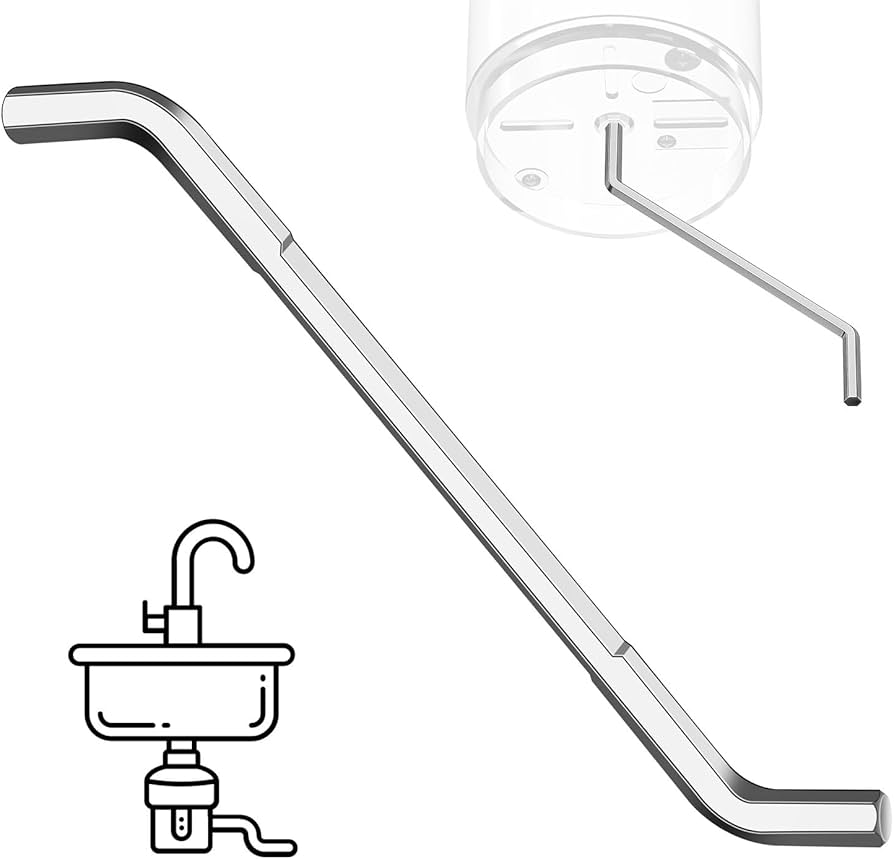
Most disposals include a 1/4-inch or 5/16-inch Allen wrench taped to the side. Insert it into the flywheel hole on the motor’s underside and rotate clockwise with steady pressure. You’ll feel resistance give way with a distinct click as the jam releases. Remove debris with long-nose pliers—never fingers. For models without a hex hole:
- Slide a wooden broom handle into the sink opening
- Wedge it against an impeller blade
- Gently twist clockwise to rotate the flywheel
Critical warning: If the flywheel won’t budge after 30 seconds of pressure, stop. Forcing it cracks internal components. Call a pro if manual rotation fails.
Slow Drainage? Fix Clogs Downstream in 10 Minutes
When your kitchen dispenser not working involves water backing up despite a running motor, the clog isn’t in the disposal—it’s in your drain pipes. Chemical cleaners will ruin your unit; skip them entirely.
Clear the P-Trap and Wall Pipe Step-by-Step

Place a bucket under the curved P-trap pipe below your sink. Loosen the slip nuts with pliers and detach the trap. Scoop out slimy food buildup (wear gloves!). Reassemble tightly. If water still drains slowly:
- Feed a sink auger (snake) into the disposal’s drain outlet
- Crank slowly while pushing forward—feel for resistance
- When the clog breaks, retract the auger and flush with hot water for 30 seconds
Key insight: Disposals only grind waste—they don’t pump water. Slow drainage means your pipes need clearing, not motor repair.
Water Leaking? Pinpoint the Source Before It Floods
Leak location tells you exactly what’s broken. Shut off water immediately to prevent cabinet damage.
Top Leak: Sink Flange Fix
Water dripping from the mounting ring means loose bolts or failed plumber’s putty. Remove the disposal, scrape old putty from the flange, apply a fresh ½-inch rope of plumber’s putty, and reseat the unit. Tighten mounting bolts evenly in a star pattern.
Bottom Leak: Time for Replacement
If water pools under the unit, internal seals or the motor housing are cracked. This isn’t repairable—seals aren’t user-serviceable. For units over 8 years old, replacement costs less than emergency plumbing for flood damage.
Motor Burnout: When Replacement Is Inevitable

If your kitchen dispenser not working shows these signs after checking power, jams, and drains, the motor is dead:
- Complete silence despite reset attempts
- Persistent humming with no blade movement
- Burning smell or visible smoke
- Frequent overload trips during light use (e.g., grinding coffee grounds)
Hard truth: Motors rarely outlive 10 years. Spending $150 on a new unit beats $300+ for repeated repairs.
Prevention Tactics That Stop 80% of Failures
Daily Non-Negotiables
- Run cold water before, during, and 30 seconds after grinding (hot water melts grease into clogs)
- Feed waste in small batches—never stuff the chamber
- Avoid: Fibrous foods, grease, pasta/rice expansion risks
Monthly Maintenance Routine
- Grind 1 cup ice cubes + 2 tbsp coarse salt (cleans chamber walls)
- Follow with lemon or orange peels (deodorizes and sharpens blades)
- Tighten mounting bolts quarterly (prevents flange leaks)
When to Call a Professional Immediately
Stop DIY efforts if you encounter:
– Electrical sparks or exposed wiring
– Leaks originating from the motor housing (bottom of unit)
– Clogs requiring main line snaking (beyond P-trap)
– Any uncertainty about electrical safety
Red flag: If your kitchen dispenser not working involves reset button failures after multiple attempts, you risk fire hazards. Shut off power and call an electrician.
Quick Answers to Critical Questions
Q: Will unplugging reset my disposal?
A: No—only the red reset button works. Unplugging does nothing for overload protection.
Q: How do I know it’s not just jammed?
A: If the motor hums but blades won’t spin after manual unjamming, it’s likely burnout.
Q: Can I use Drano if water backs up?
A: Never. Chemicals corrode disposal seals and void warranties. Use a sink auger only.
Your garbage disposal is designed for user repairs—but safety comes first. By methodically checking power, jams, and drains in this order, you’ll solve nearly all “kitchen dispenser not working” crises in under 15 minutes. Remember: cold water is your best friend, chemical cleaners are your worst enemy, and that red reset button is your secret weapon. When in doubt, shut off power and walk away—your sink can wait, but a trip to the ER can’t. Keep this guide handy, and you’ll never pay for a $100 “emergency” fix again.