That drawer that scrapes when closing or gaps unevenly? It almost always traces back to one critical mistake: inaccurate measurements. Whether you’re replacing a broken box or installing custom organizers, measuring kitchen drawers requires military-grade precision—not guesswork. A single 1/16-inch error can transform your dream kitchen refresh into a costly return nightmare.
Here’s the hard truth: most DIYers measure the decorative front instead of the actual box, or forget slide-specific clearance rules. But professionals know it’s not about the tape measure—it’s about what you measure and how you apply slide hardware deductions. This guide reveals the exact system cabinet makers use to capture dimensions that guarantee perfect fits every time. You’ll learn to navigate obstructions, decode slide charts, and size fronts like a factory technician—saving you weeks of delays and hundreds in replacement costs.
Empty and Prep the Work Area
Clear every item from the drawer—including utensils wedged behind dividers. Even a thin spatula can shift your measurement by 1/8 inch. Pull the drawer fully out; most detach by lifting upward while sliding forward. Place it on a stable workbench where you can access all sides without obstruction.
Critical visual cue: Check for pipes or wiring protruding into the cabinet opening. These obstructions reduce usable depth and must be measured at their narrowest point. For example, a dishwasher supply line might cut depth from 24 inches to 20 inches in one section—size all drawers for that minimum dimension.
Pro tip: Snap a photo of the drawer’s orientation before removal. Reinstalling backward (with slides on the wrong side) is a common $50 mistake. Allow 5 minutes for this prep—rushing here guarantees redoing measurements later.
Measure Existing Drawer Boxes
Capture Outside Dimensions to 1/16-Inch Precision
Flip the drawer box upside down on your workbench. Hook your tape measure firmly on the left outer wall (not the decorative front) and stretch straight across to the right outer wall. Press hard to eliminate tape flex—metal tapes can sag and under-read by 1/16 inch. Record the exact measurement, rounding down if it falls between marks.
For height, measure the tallest point of the drawer side from bottom edge to top edge. Don’t average multiple points—use the maximum height to prevent binding. Depth is measured from the actual box front (not the attached false front) to the outside back wall. If your drawer has a removable decorative front, detach it first.
Common mistake: Measuring the overlay front instead of the box. Drawer fronts typically extend 1/2 inch beyond the opening on all sides. A 15-inch opening often pairs with a 14-inch box—if you measure the front, you’ll order a drawer 1 inch too wide.
Account for Supplier-Specific Limitations
QuikDrawers.com accepts custom widths and depths in 1/16-inch increments but only offers heights in 1/2-inch steps (e.g., 4.5″, 5″). CabinetDoorsNMore uses fixed 2-inch depth increments for side-mount slides (10″, 12″, 14″). If your measurement is 13 7/8 inches wide, round down to 13 3/4 inches for QuikDrawers but to 12 inches for CabinetDoorsNMore—never round up.
Expert note: For dovetail boxes, measure at the joint’s narrowest point. Wood movement can cause seasonal expansion, but always size for the smallest recorded dimension.
Size Cabinet Openings for New Drawers
Record Raw Interior Dimensions Before Deductions
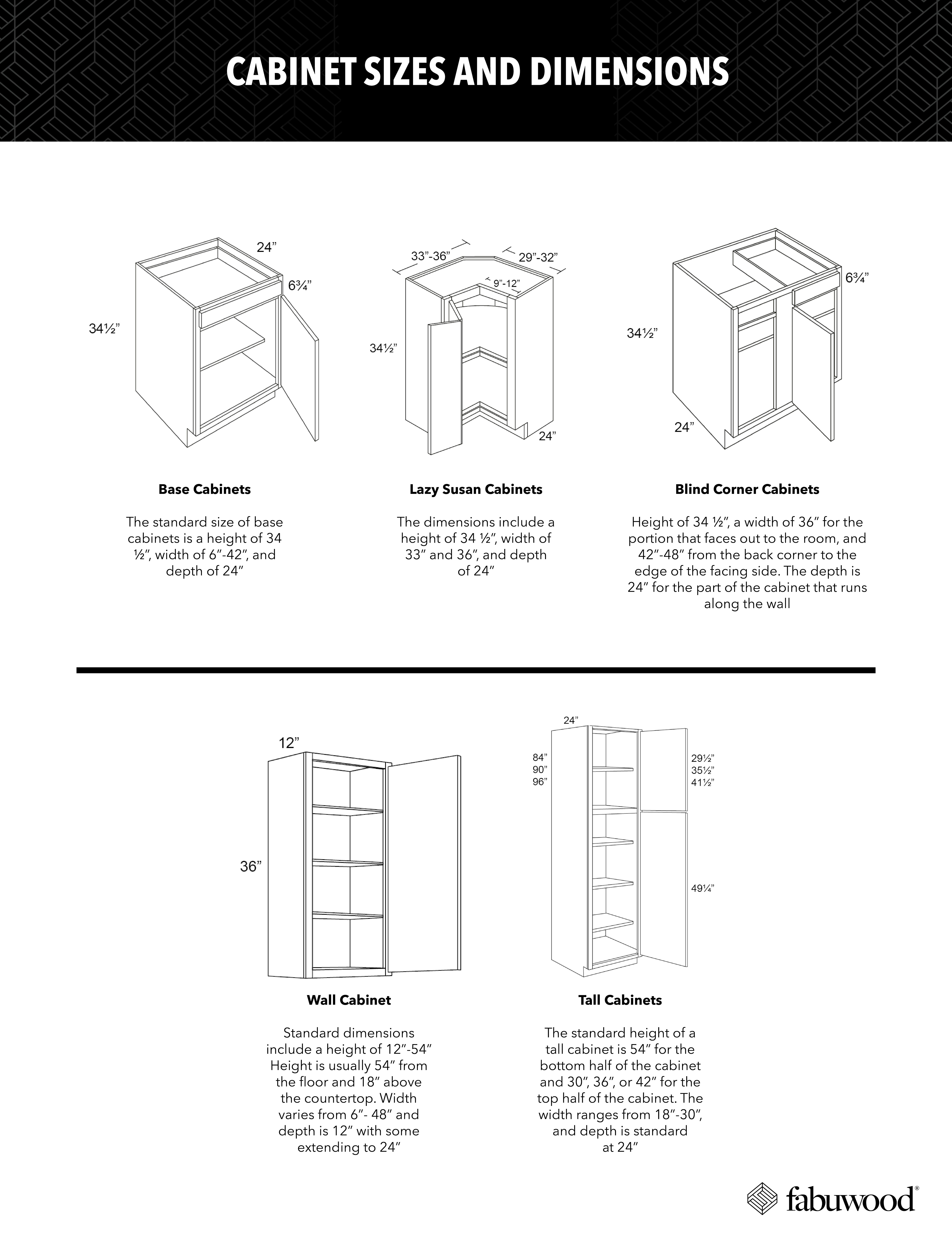
Inside the empty cabinet, measure the clear width between the left and right frame faces—not the slides or existing hardware. Next, measure height from the top rail to the bottom rail. Finally, determine depth from the back wall to the front edge of the face frame.
Critical check: Slide a ruler horizontally across the opening at multiple heights. Base cabinets often taper inward by 1/4 inch toward the back—use the narrowest width measurement. Verify depth at the top, middle, and bottom; plumbing or electrical boxes may reduce usable depth in specific zones.
Apply Slide-Type Clearance Deductions
:max_bytes(150000):strip_icc()/100598538-1f6d4577d4174fb9b7548c4f2b77b384.jpg)
| Slide Type | Width Deduction | Height Deduction | Depth Rule |
|---|---|---|---|
| Side-Mount Standard | Subtract 1″ total | Subtract ½” minimum | Drawer depth = cabinet depth – ½” (non-self-adjusting) |
| Side-Mount Heavy-Duty | Subtract 1 9/16″ total | Subtract ½” minimum | Same as above |
| Blum Undermount | Subtract ⅜” total | Subtract ¾” then round down | Drawer depth MUST equal slide length (12″, 15″, etc.) |
| Euro Side-Mount | Subtract 1″ total | User-selected | Drawer depth = slide length – ¼” (unless height is within ¾” of opening) |
Real calculation: For a 15-inch opening with Blum undermount slides and 5/8-inch-thick sides: 15″ – 0.375″ = 14 5/8-inch drawer width. If cabinet depth is 22 1/2 inches, select 21-inch slides—drawer depth must be exactly 21 inches.
Match Hardware to Your Measurements
Ball-Bearing Side-Mount Selection Rules
These slides come in 2-inch increments (10″ to 28″). Your drawer depth can be any length up to the slide’s maximum—but never exceed cabinet depth minus hardware offset. For a 21 5/8-inch cabinet with non-self-adjusting brackets: 21 5/8″ – 1/2″ = 21 1/8″. Choose 20-inch slides to stay under this limit.
Time-saving shortcut: Always select the longest slide that fits. A 20-inch slide in a 21-inch cabinet provides smoother operation and 30% higher weight capacity than a 16-inch slide. Allow 2 minutes to cross-reference your depth against slide charts.
Undermount Slide Critical Requirements
Blum 563H slides demand exact drawer depth matching (12″, 15″, 18″, 21″). The cabinet interior must exceed the physical slide length by 1/2 to 7/8 inch for rear brackets. If your cabinet depth is 22 1/2 inches, a 21-inch slide fits—but 22 1/2″ – 7/8″ = 21 5/8″, so you’d need 21 1/2-inch slides (which don’t exist). Downsize to 21 inches.
Warning: Undermount slides require factory notching and boring. Order this option when purchasing—DIY modifications cause binding.
Size Drawer Fronts and Overlays Correctly
Calculate Overlay vs. Inset Dimensions
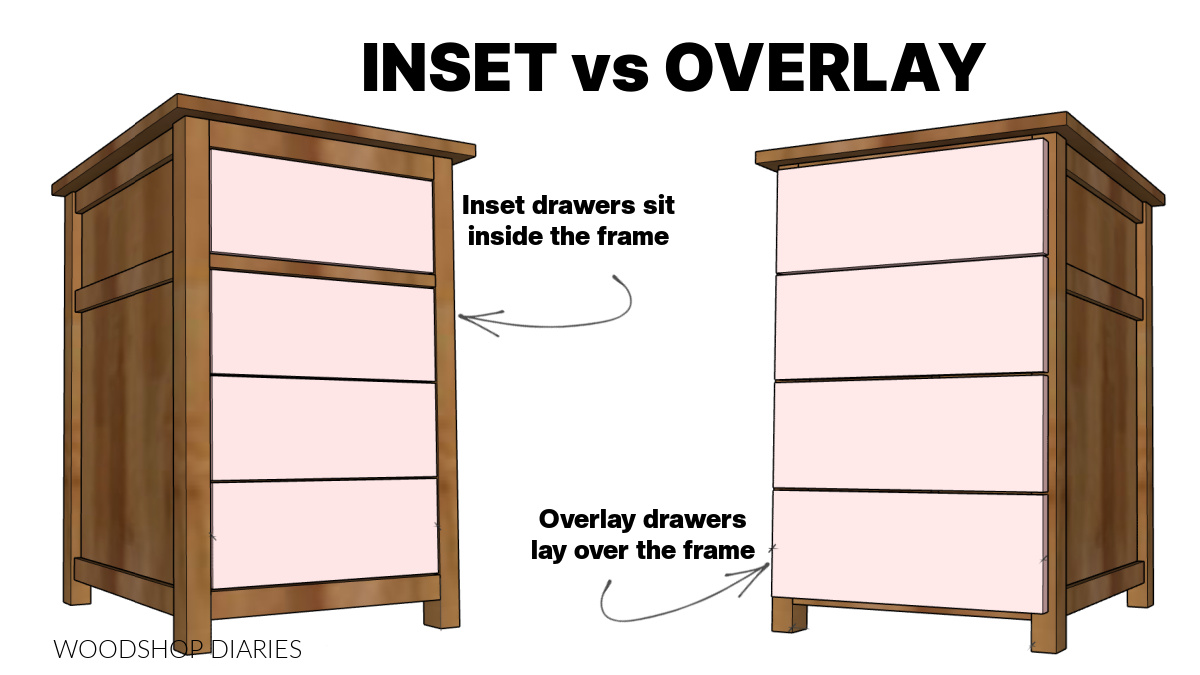
For standard overlay fronts (extending 1/2 inch beyond the opening on all sides), add 1 inch total to the opening width and height. A 15″ x 8″ opening needs a 16″ x 9″ front. For inset fronts (flush inside the opening), subtract 1/8 inch total for clearance—order a front 1/4 inch smaller than the opening in both dimensions.
Critical adjustment: Inset fronts require depth recalculation. If your cabinet depth is 24 inches and the front is 3/4 inch thick, usable depth = 24″ – 3/4″ = 23 1/4 inches. Apply slide deductions to this number, not the raw cabinet depth.
Pro tip: Remove the existing front before measuring. Overlay fronts often hide imperfect box dimensions—measuring the box directly prevents compounding errors.
Handle Stacked Drawers and Obstructions
Stacked Drawer Bank Dimensions
In tall cabinets with multiple drawers, box heights are intentionally 2–3 inches shorter than the opening to support tall fronts and prevent warpage. For a 14-inch opening, the bottom drawer box might be 11 inches tall. Never make a box taller than 75% of the opening height—e.g., max 10.5 inches for a 14-inch opening.
Visual cue: Look for sagging fronts on existing drawers—this indicates boxes were oversized during initial installation. Measure the actual box, not the warped front.
Non-Standard Cabinet Solutions
For corner cabinets or those with obstructions:
1. Measure depth at the narrowest intrusion point (e.g., where a pipe enters).
2. Reduce all drawer depths to this minimum dimension.
3. For height, measure the opening’s shortest vertical span.
Example: A sink cabinet with plumbing may have 20 inches depth at the pipe location but 24 inches elsewhere. Size all drawers for 20 inches depth—otherwise, the back of deeper drawers will hit pipes.
Pro tip: Cut a cardboard template to your calculated drawer size. Test-fit it in the opening—wiggling it side-to-side reveals 1/8-inch errors that tape measures miss.
Final Dimension Checklist
Verify these 10 measurements before ordering:
- [ ] Opening width (inside frame): ___ in
- [ ] Opening height (inside frame): ___ in
- [ ] Cabinet depth (back to frame): ___ in
- [ ] Obstruction depth (if any): ___ in
- [ ] Slide type selected: _____
- [ ] Calculated drawer width: ___ in
- [ ] Calculated drawer height: ___ in
- [ ] Selected slide length: ___ in
- [ ] Final drawer depth: ___ in
- [ ] Front type (overlay/inset): _____
Double-check reality: Most suppliers like QuikDrawers.com or CabinetDoorsNMore reject returns for measurement errors—not manufacturing defects. Re-measure when tired; fatigue causes 90% of oversights.
Order Drawers That Fit Perfectly
With precise dimensions in hand, choose suppliers matching your tolerance needs. QuikDrawers.com handles 1/16-inch custom increments for width/depth but limits heights to 1/2-inch steps. CabinetDoorsNMore offers fixed-depth slides optimized for standard hardware—ideal if your measurements align with their 2-inch increments. For truly non-standard sizes (like 13 7/16-inch widths), Old Saguaro Woodcraft builds to exact specs but requires 3–4 weeks lead time.
Remember: measuring kitchen drawers isn’t about speed—it’s about eliminating variables. That extra 15 minutes verifying slide deductions prevents a 3-week delay waiting for replacements. When your new drawer glides silently into place on the first try, you’ll know the precision paid off. Start your project with measurements so accurate, the only thing sliding smoothly is your project timeline.