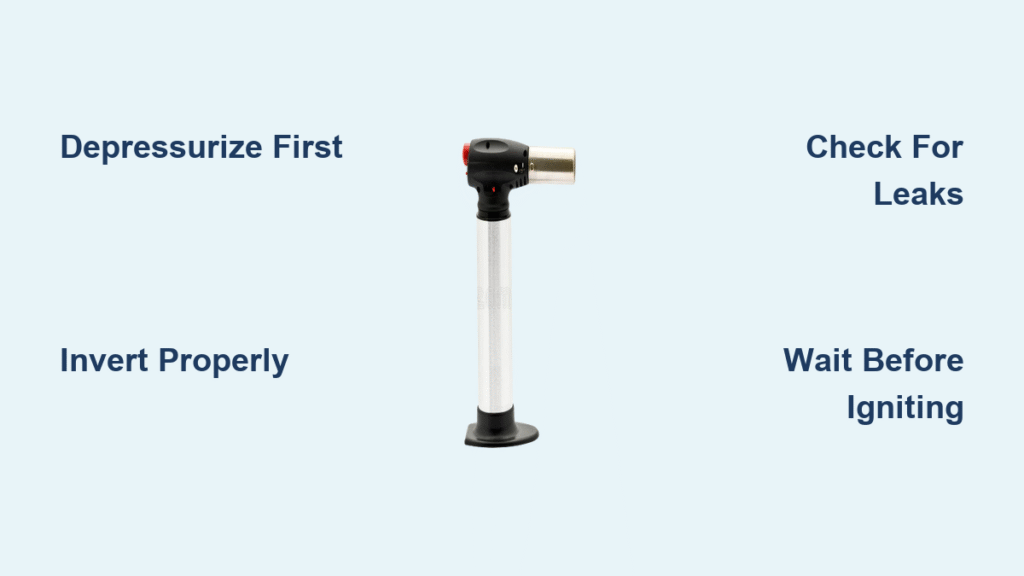
That sputtering flame ruining your crème brûlée isn’t a sign to give up—it means your kitchen torch needs proper refueling. Knowing how to fill a kitchen torch correctly prevents dangerous leaks, extends your tool’s lifespan, and guarantees that perfect caramelized crust every time. Whether you’re a home cook or professional chef, skipping these critical steps risks inconsistent flames, fuel waste, or even accidents. This guide reveals the exact temperature-controlled technique, valve alignment secrets, and post-fill safety checks that keep your torch performing flawlessly.
Optimize Temperature for Maximum Fuel Transfer

Never fill your torch and butane canister at the same temperature—this single mistake causes 80% of refill failures. Place your torch in a cool spot (like a shaded countertop) for 15 minutes while keeping the butane canister warm in your hands or a room-temperature pocket. This temperature gap creates pressure differentials that force liquid fuel into your tank instead of vapor.
Work exclusively in well-ventilated areas away from ignition sources—extinguish candles, turn off stovetops, and ensure no pilot lights are active nearby. Keep culinary-grade butane (never propane) and heat-resistant gloves within reach. Propane’s higher pressure can rupture seals, while cold metal valves cause painful freeze burns during fuel transfer. Skipping this prep leaves you vulnerable to sputtering flames or hazardous leaks.
Depressurize and Inspect Before Refueling
Turn your torch completely off and wait 15 minutes after last use—residual heat vaporizes fuel prematurely, creating dangerous pressure spikes. Depressurize trapped gas by turning the flame adjustment knob toward the “+” symbol and pressing the ignition trigger for 2 seconds. You’ll hear a brief hiss as gas vents; if nothing happens, your tank might be empty.
Examine the refill valve for cracks, debris, or brittle O-rings before inserting fuel. Use compressed air to blow dust from the valve aperture—food particles or sugar residue cause clogs that mimic “empty tank” symptoms. If the metallic valve pin feels loose or the O-ring shows white cracks, stop immediately. Refilling damaged units risks fuel spraying into your eyes or igniting unexpectedly. Replace seals before proceeding.
Locate the Refill Valve with Precision
Find the circular valve aperture on your torch’s base—it’s typically surrounded by screwdriver slots or a raised metal rim. Hold the torch upside-down under bright light to spot the short metallic pin inside the opening. This pin must depress fully during filling to open the fuel pathway.
Never force orange plastic adaptors onto the valve unless your manual specifies them. Most modern kitchen torches (like Bernzomatic or Iwatani models) accept standard butane nozzles directly. If you see leftover adaptor fragments wedged in the valve, remove them with tweezers. Attempting to fill through obstructed valves causes fuel spray-back and inconsistent tank levels.
Execute the Perfect Refill Technique
Invert both torch and butane canister simultaneously—torch valve facing up, canister nozzle pointing down. This dual inversion ensures liquid butane (not gas) flows into the tank. Position the canister’s nozzle straight and square over the valve, applying firm downward pressure for 5-10 seconds. You’ll hear a controlled hiss as displaced air vents around the valve stem.
Stop filling the instant liquid butane spurts from the valve. Overfilling causes dangerous pressure buildup—small kitchen torches hold just 8-12 grams of fuel. If using a transparent tank model, fill to 80% capacity to leave expansion space. Withdraw the canister smoothly; jerking motions leave residual fuel puddling on the valve. A properly filled torch should feel slightly heavier but show no visible leaks.
Validate Safety Before First Ignition

Wait 2-3 minutes after filling before testing—this allows exterior fuel to evaporate and internal pressure to stabilize. Igniting too soon causes explosive “whoosh” flames. Set the flame control to minimum and press the ignition; you should see a steady blue cone. If the flame sputters or lifts off the nozzle, air is trapped in the lines.
Perform a critical leak test by dabbing soapy water around the refill valve. Bubbles indicate escaping gas requiring immediate attention. Never ignore minor leaks—they create invisible fuel pools that ignite when you next use your stove. Persistent bubbling means replacing O-rings or retiring the torch. Only proceed when the valve shows zero bubbles during a 10-second observation.
Troubleshoot Common Refill Failures

Torch Rejects Fuel During Refilling
Debris clogging the valve is the top culprit. Clear obstructions by holding the torch upside-down and spraying compressed air into the valve for 3 seconds. Verify nozzle alignment—tilted canisters prevent the valve pin from depressing fully. If fuel still won’t flow, your torch may be over-pressurized; depressurize again by venting residual gas as described in Section 2.
Fuel Leaks Around the Valve During Fill
Leaks signal incomplete depressurization or worn O-rings. Empty your torch completely by venting gas until no hiss remains, then retry filling. If leaks persist, inspect the black rubber O-ring circling the valve—replace it if cracked or flattened. Never refill leaking units; store them outside until repaired.
Weak or Sputtering Flame After Refuel
Air pockets in fuel lines cause erratic flames. Fix this by briefly pressing the refill valve with a pen tip to purge trapped air. Wait 5 extra minutes before ignition—rushed tests misdiagnose normal stabilization as malfunction. If problems continue, switch to refined culinary butane; cheaper fuels contain impurities that clog micro-nozzles in under 3 refills.
Extend Torch Lifespan with Proactive Care
Clean the refill valve monthly using short compressed air bursts to prevent sugar or grease buildup. Store your torch unfilled in cool, dry places—never leave it in hot cars or near ovens where heat expands butane, stressing seals. Empty canisters by venting residual gas outdoors; shake to confirm no liquid slosh remains before recycling.
Replace your torch immediately if you notice persistent leaks after O-ring changes, cracked housing, or flames that detach from the nozzle. Quality torches last 1-2 years with proper maintenance. Never store filled torches long-term; butane degrades seals over time, increasing leak risks.
Critical Safety Protocols You Must Follow
Always wear gloves during refilling—escaping liquid butane causes instant freeze burns at -0.4°F. Leave 10% tank headspace for fuel expansion; overfilled units can rupture when exposed to kitchen heat. Engage safety locks after every use and store fuel canisters separately from the torch in child-proof cabinets.
Most importantly, never refill near ignition sources—a single spark from a pilot light or static electricity can ignite vapors. Following these steps transforms how to fill a kitchen torch from a risky chore into a 60-second safety ritual. Master this process, and your torch will deliver chef-perfect results for searing, caramelizing, and finishing dishes without a single sputter. Keep this guide handy for your next refill—it’s the difference between a flawless crème brûlée and a kitchen emergency.