That desperate scramble for elbow room when trying to eat breakfast between the fridge and stove? Over 68% of urban kitchens fall under 100 square feet, forcing homeowners to choose between meal prep space and a proper dining surface. But you don’t need to sacrifice functionality for square footage—how to fit a table in a small kitchen starts with strategic planning, not compromise. This guide reveals battle-tested solutions from real compact kitchens, including exact measurements, space-hijacking furniture types, and layout hacks that transform 7×7 foot nightmares into comfortable dining zones. Stop eating off your lap; let’s reclaim your eating space.
Measure Your Kitchen First
Skipping measurements guarantees a table that blocks oven access or traps you mid-meal. Grab painter’s tape and a tape measure before browsing furniture—your clearance zones dictate everything.
Minimum Space Requirements
- Two-person survival zone: 7×7 feet (2.1×2.1m) is the absolute minimum
- Four-person comfort: Requires 8×8 feet (2.4×2.4m) with breathing room
- Six-person squeeze: Needs 9×9 feet (2.7×2.7m) for holiday gatherings
Critical Clearance Rules
- 36 inches between table edge and cabinets for primary walkways
- 30 inches is the bare minimum to shuffle past seated diners
- 18-24 inches extra space behind chairs for safe pull-out maneuvering
Quick Floor Test Method
- Tape your target table dimensions directly on the floor
- Walk the space during peak cooking times with oven/fridge doors open
- Mark door swing arcs with additional tape to avoid collision zones
- Time yourself moving between sink and stove—under 30 seconds means success
Choose the Right Table Shape
Your kitchen’s geometry—not Pinterest trends—determines the optimal shape. Each configuration solves specific spatial conflicts.
Round Tables Save Corners
A 36-42″ round pedestal table seats four without sharp corners bruising hips in tight turns. Perfect for center placement in square kitchens or under bay windows, the circular footprint eliminates dead zones where square tables would block pathways.
Narrow Rectangles Double as Prep
20-24″ wide rectangles hug galley kitchen walls like a natural extension. Look for models with leaves that fold completely under counters—serving as breakfast bars by day and dining surfaces by night.
Semi-Circles Hug Walls
Demilune tables need just 12-18″ depth against walls. Mount with heavy-duty brackets for instant fold-down dining that vanishes when not needed—ideal for entry walls or cabinet run ends.
Space-Saving Table Types That Actually Work
Forget gimmicks; these solutions dominate real small kitchens.
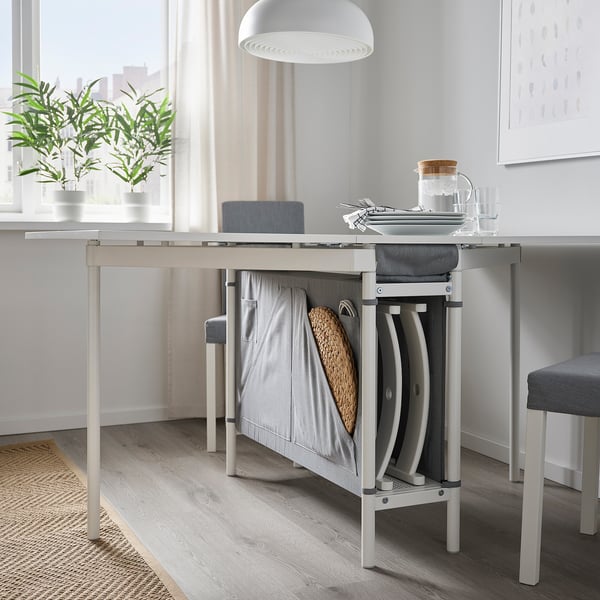
Drop-Leaf Tables
The IKEA KALLHÄLL (31½”x29½” closed) extends to 47¼” with leaves while storing chairs in its integrated drawer. Pottery Barn’s Mateo version ($599) expands from 30″x30″ to 54″—perfect for corner placement. Pro tip: Measure your under-bed storage before buying to ensure leaf accommodation.
Wall-Mounted Solutions
IKEA’s Norberg folds to a 3″ profile while seating two, but critical installation note: Brackets must anchor into wall studs for 50kg+ load capacity. Custom floating shelves with steel brackets create seamless wall-hugging surfaces—24-30″ deep provides ample dining real estate.
Rolling Kitchen Carts
Butcher-block carts (36″x20″x36″) on locking wheels triple as mobile prep stations, breakfast bars with two stools, and storage units. During dinner prep, park it against the sink; slide it center-stage for meals.
Placement Strategies by Kitchen Layout

Your existing footprint dictates the winning tactic.
Galley Kitchen Tactics
Run a 20-24″ wide table parallel to cabinets—it doubles as extra prep space. Or install a wall-mounted table opposite the stove with two stools that tuck completely under when cooking. For maximum flexibility, use a 48″x28″ table on locking castors that slides against walls during meal prep.
L-Shaped Kitchen Solutions
Build an L-shaped banquette in the short leg of your kitchen, pairing it with a 36″ round pedestal table. Or push an extendable table against the long wall, extending leaves only toward open floor spaces during gatherings—never into circulation paths.
U-Shaped Kitchen Options
Convert one run into a peninsula by extending cabinets 12″ to create 36″ high counter seating. Pair with 24-26″ backless stools that tuck fully under. For hidden dining, install a custom 18″x30″ butcher block that slides out from toe-kick space under base cabinets.
Materials That Make Spaces Feel Larger

Strategic material choices create optical illusions of space.
Glass Tops Disappear
Tempered glass reflects light and reveals floor space beneath—tricking eyes into perceiving extra square footage. Budget $350-800 for quality options that withstand daily use without showing scratches.
Color-Matching Tricks
Match your tabletop to counter color for seamless integration. A white oak table against quartz counters reads as a counter extension rather than furniture intrusion—visually expanding your footprint.
Mirror Magic
Install a 24″x36″ mirror wall opposite your table to double perceived depth. Even this modest size dramatically opens cramped quarters by reflecting light and creating spatial continuity.
Seating That Disappears When Not Needed
Every inch counts when chairs sit idle.
Folding Bistro Chairs
17″ wide chairs fold flat to 3″ depth—store four in a pantry or hang on wall hooks. Powder-coated steel versions withstand daily use without wobbling.
Storage Benches
Flip-top benches (42″x14″x18″) provide seating plus 6″ deep storage for table linens or cookbooks. Critical upgrade: Use slow-close hinges to prevent finger-pinching during daily use.
Wall-Hung Solutions
Hinged benches fold vertically against walls, revealing coat hooks on undersides. Perfect for kitchens adjacent to entryways—doubles as seating during meals and storage during the day.
Real Kitchen Examples That Work
Proven setups from actual compact homes:
121 Square Foot DC Kitchen
A 36″ round pedestal table paired with a 42″ bench maintains 36″ oven clearance and 30″ doorway clearance. “We host four adults daily,” notes the owner, “with extension leaves stored in the closet for holidays.”
432 Square Foot Berkeley Cottage
A 48″x24″ rectangle runs parallel to single-wall cabinets, doubling as prep space. Two backless stools store on a shelf beneath—eliminating the need for a rolling island. “This setup saved us 2 feet of precious floor space,” the homeowner confirms.
Purchase Checklist Before You Buy
Avoid costly return trips with this verification list:
- [ ] Triple-check measurements with appliances open during peak usage
- [ ] Confirm doorway clearance—flat-pack tables often exceed assembled width
- [ ] Verify seat height: 30″ tables require 18″ chairs; 36″ counters need 24-26″ stools
- [ ] Budget 15% extra for delivery of tables over 48″ (won’t fit standard doors)
When No Table Will Fit: Smart Alternatives
If measurements simply don’t work:
Counter Extensions
Install a 12-15″ island overhang with backless stools, or a slide-out 18″x30″ butcher block under upper cabinets. Fold-down shelves inside pantry doors (24″x16″) create instant two-person dining in hallway niches.
Living Room Solutions
Repurpose a 30″x48″ drop-leaf console against the living room wall—it stays closed for daily use but opens for meals. Convert coffee tables with height-adjustable mechanisms into dining surfaces.
Maintenance for Long-Term Success
Your small kitchen table endures double duty—protect it:
Glass tops: Clean weekly with microfiber + vinegar solution (no abrasive pads)
Solid wood: Wipe spills immediately; re-oil every 6-12 months to prevent cracking
Metal frames: Inspect weld joints annually; touch up paint chips to prevent rust
Small kitchens demand smart solutions, not sacrifices. Whether you choose a wall-mounted drop-leaf, rolling butcher-block cart, or convertible console, the key is matching your exact constraints with proven furniture types. Measure twice, buy once, and finally enjoy meals at a proper table—even in that stubborn 7×7 foot kitchen. Your dining dignity awaits.