Your kitchen rug silently collects coffee drips, grease splatters, and pet hair while you cook—yet most people ignore it until the smell hits. A neglected rug becomes a breeding ground for bacteria, mold, and allergens that can contaminate food prep areas and trigger asthma attacks. The good news? With the right approach, you can transform a grimy mat into a fresh, hygienic centerpiece in under an hour. This guide reveals exactly how to clean a kitchen rug safely—whether it’s cotton, synthetic, wool, or rubber-backed—without shrinking, fading, or destroying the backing. You’ll learn material-specific wash cycles, stain-killing tricks, and drying methods that prevent mildew.
Unlike living room rugs, kitchen mats face daily assaults from cooking oils, food spills, and damp dishwater. Skipping regular cleaning turns them into toxic traps: grease attracts dust mites, moisture breeds black mold under rubber backings, and crumbs ferment into foul odors. But overwashing causes its own disasters—shrunken cotton, cracked vinyl, or disintegrating jute. Follow this proven system to keep your kitchen rug hygienic and long-lasting.
Cotton Kitchen Rug Cleaning Routine
Cotton rugs absorb spills like sponges but shrink 5–10% in hot water and hold grease stubbornly. Avoid these pitfalls with a targeted cold-wash method.
Cold-Wash Method That Prevents Shrinkage
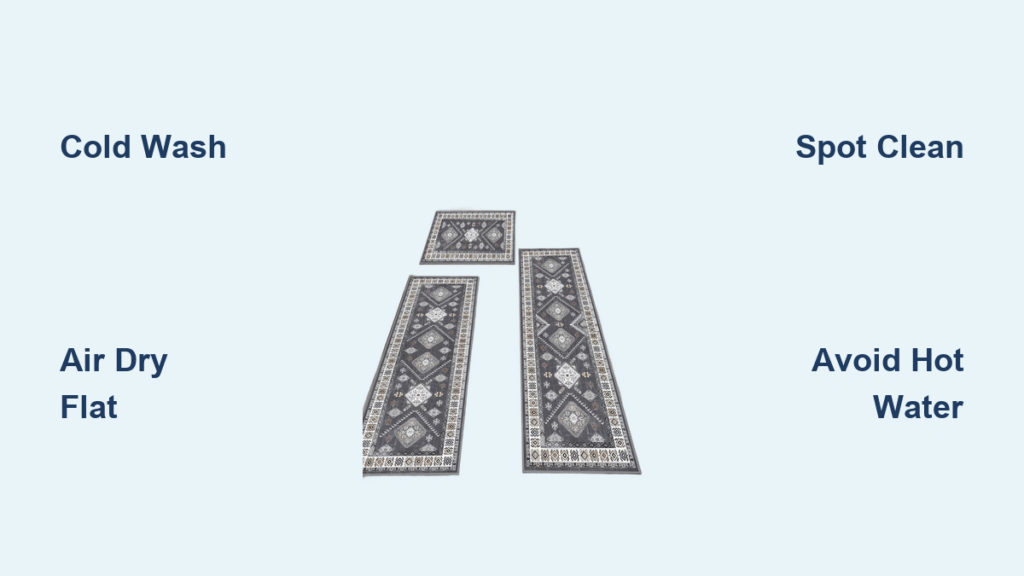
Set your washer to cold water (≤30°C), gentle cycle, and 800 rpm spin max. Use only ¼ cup mild liquid detergent—optical brighteners leave residue that attracts future dirt. For dried-on food stains, pre-treat with enzyme cleaner 10 minutes before washing. Never overload the machine; your rug should fill ≤¾ of the drum for proper agitation.
Air-Dry Flat Technique for Longevity
Skip the dryer entirely. Lay the rug flat on a drying rack away from direct sunlight (which fades colors). While damp, reshape curled corners by pressing them flat—place heavy books on edges to maintain squareness. Flip after 6 hours for even drying. Expect 24–48 hours total dry time depending on humidity. Rushing this step risks mildew growth within 48 hours.
Synthetic Rug Wash Protocol
:max_bytes(150000):strip_icc()/How-to-Wash-Throw-Rugs-for-Best-Results-03-dfca297f9bc74678a5e3366121464dd8.jpg)
Nylon, polyester, and polypropylene rugs resist stains but bleed dyes and crack rubber backings if mishandled. Protect them with precise settings.
Machine Settings That Preserve Backing Integrity
Use warm water ≤30°C on gentle cycle with an extra rinse cycle to eliminate soap film that attracts dirt. If your rug has fringe, zip it into a mesh laundry bag first to prevent tangling. Never use fabric softener—it coats fibers, reducing absorbency and making spills harder to clean next time.
Grease Spot Treatment Without Damage
For fresh oil splatters:
1. Cover the stain with cornstarch for 30 minutes
2. Vacuum powder thoroughly
3. Work dish soap + warm water paste into fibers using circular motions
4. Rinse with damp cloth before machine washing
Critical: Skip hot water—it delaminates synthetic backings permanently.
Natural Fiber Rug Rescue (Jute/Sisal)
:max_bytes(150000):strip_icc()/how-to-clean-a-jute-rug-7372297-step-03-9bed4adbec334719806b415f93d22850.jpg)
Jute and sisal rugs dissolve if saturated. These plant fibers absorb water like sponges, then rot internally. Machine washing is never an option.
Spot-Clean Technique for Water-Sensitive Fibers
Mix 1 tsp mild soap with 1 cup cool water. Dab (never rub) stains with a white cloth, applying minimal moisture. Immediately blot dry with a towel, then aim a fan at the spot for 2 hours. Never use steam cleaners—the trapped moisture turns jute into cardboard within days. If the rug feels damp beyond the surface layer, stop cleaning and let it air-dry for 48 hours.
Anti-Fatigue Mat Deep Clean
Rubber-backed gel mats trap water in their foam cores, creating black mold colonies. Machine washing cracks the backing—hand-scrubbing is non-negotiable.
Hand-Scrub Process to Eliminate Mold Risk
- Shake debris outside vigorously
- Fill tub with 2 gallons warm water + 2 tbsp dish soap
- Scrub 1-foot sections with a soft brush (never abrasive)
- Rinse with high-pressure shower until water runs clear
- Prop vertically against a wall to dry—never lay flat
Warning: If you see black spots on the backing, replace the mat immediately. Mold has already colonized the foam core.
Stain Removal Cheat Sheet
| Spill | First 30 Seconds | Treatment Mix | Dwell | Final Move |
|---|---|---|---|---|
| Coffee | Blot, don’t rub | 1:1 vinegar + cold water | 10 min | Normal wash |
| Red wine | Salt layer to absorb | Vacuum, then vinegar mix | 15 min | Cold wash |
| Grease | Baking soda coat | Dish soap paste | 5 min | Scrub, rinse |
| Tomato sauce | Spoon off solids | 3% hydrogen peroxide* | 5 min | Cold rinse |
| *Patch test first on light rugs only |
Pro tip: Always start with the mildest solution. Escalate only if stains persist—aggressive cleaners damage fibers.
Machine-Wash Mistakes That Ruin Rugs
:max_bytes(150000):strip_icc()/SPR-how-to-wash-a-ruggable-rug-7966013-03-cfc9559f653245b1a947cdeafed65de9.jpg)
Overloading the washer: Crowding prevents agitation, leaving soap residue that attracts new dirt. Use a laundromat’s 50-lb machine for rugs >4×6 ft.
Hot water disasters: Cotton shrinks, synthetic backings delaminate, and wool felts. Always choose cold water (≤20°C for wool blends).
Single rinse cycle: Kitchen rugs trap detergent. Enable an extra rinse or run a second rinse-only cycle—residue makes fibers stiff and dirt-prone.
Drying Timeline & Setup
| Method | Setup Time | Total Duration | Risk Level |
|---|---|---|---|
| Outdoor line | 5 min | 12-24 h | Low (avoid noon sun) |
| Indoor rack | 10 min | 24-48 h | Medium (use fan) |
| Dryer low-heat | 2 min | 40 min cycles | High (check every 10 min) |
Non-negotiable rule: Your rug must be 100% dry before reuse. Even slight dampness breeds mildew within 48 hours. Test by pressing your palm against the backing—if it feels cool, it’s still wet.
Daily Maintenance Habits
- Vacuum both sides weekly: Flip your rug to remove crumbs hiding underneath. Use suction-only mode for shag rugs.
- Rotate 180° every 3 months: Balance sun fading and foot traffic patterns.
- Baking soda refresh: Sprinkle, wait 15 minutes, then vacuum to neutralize odors between deep cleans.
- Blot spills within minutes: Set a phone reminder—delaying turns coffee into permanent stains.
When to Call Professionals
- Rugs larger than 8×10 feet (home machines can’t handle them)
- Pet urine soaked through to the backing (requires industrial enzyme baths)
- Hand-knotted wool or antique pieces (DIY risks felting)
- Persistent moldy smells (sign of deep colonization)
Average cost is $1.50/sq ft for synthetics and $4/sq ft for wool—far cheaper than replacing a ruined rug.
Quick Pre-Wash Checklist
Before any wash method:
– [ ] Care label confirms machine-washability
– [ ] Colorfast test passed on hidden corner
– [ ] Stains pre-treated with appropriate solution
– [ ] Washer set to extra rinse cycle
– [ ] Drying space cleared for 24-48 hours
A clean kitchen rug protects your family’s health by eliminating bacteria and allergens that accumulate daily. Set a recurring phone reminder: vacuum weekly, deep clean monthly, and your rug will last years instead of months. Never underestimate the power of how to clean a kitchen rug correctly—it’s your first defense against kitchen contaminants.