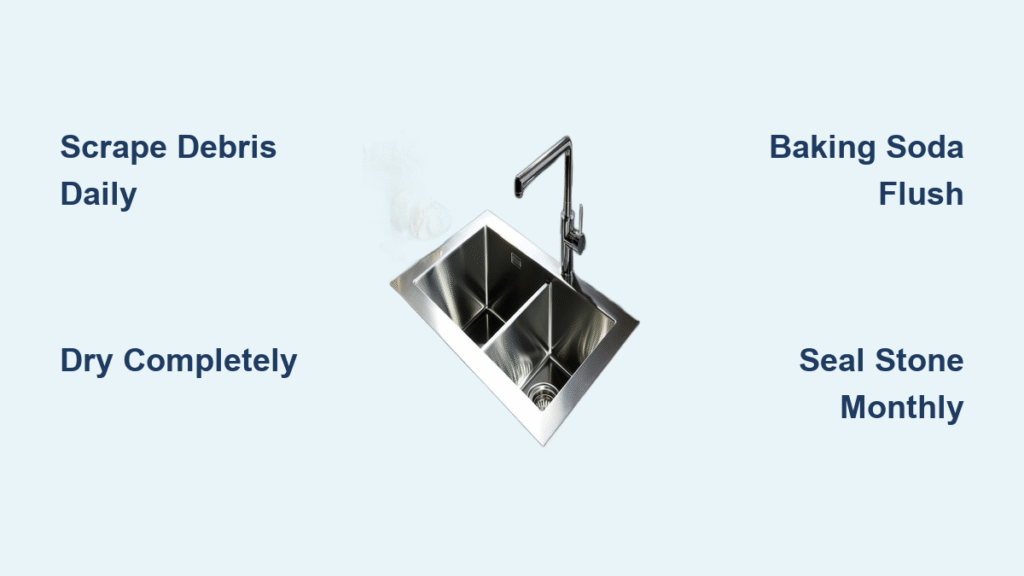
Your kitchen sink handles raw chicken juice, coffee grounds, and scorching cast-iron skillets daily yet gets mere seconds of attention. This neglect explains why NSF International’s 2011 study found 45% of kitchen sinks harbor dangerous bacteria like E. coli and salmonella that survive up to 32 hours. The USDA’s 2023 traceable-E. coli trial confirmed sinks show the highest post-prep contamination in homes. But you can transform your sink into a hygienic, sparkling centerpiece with a systematic how to maintain kitchen sink routine tailored to its material. Discover exact daily protocols, material-specific deep cleaning methods, and proven drain maintenance that keeps bacteria at bay while preserving your sink’s finish for decades.
Daily 30-Second Sink Maintenance That Prevents 90% of Problems
Skip this step and you’re inviting bacterial buildup and stubborn stains. Most sink issues start with dried-on food particles and moisture left overnight. Your nightly routine takes less time than loading the dishwasher but delivers massive long-term benefits.
- Scrape debris from drain strainer into trash (never compost raw meat residue)
- Spray hot water for 10 seconds to flush particles down the drain
- Apply dish soap directly to surfaces with a microfiber cloth
- Wipe basin, faucet handles, and outer lip following the grain direction on stainless steel
- Rinse thoroughly and dry completely with a clean cloth to prevent water spots
Pro tip: Always dry your sink after this routine. That thin film of moisture you leave behind breeds bacterial colonies and creates mineral deposits. This simple habit stops hard water spots before they form and keeps faucet undersides germ-free.
Weekly Deep Cleaning by Sink Material (No Damage Guaranteed)
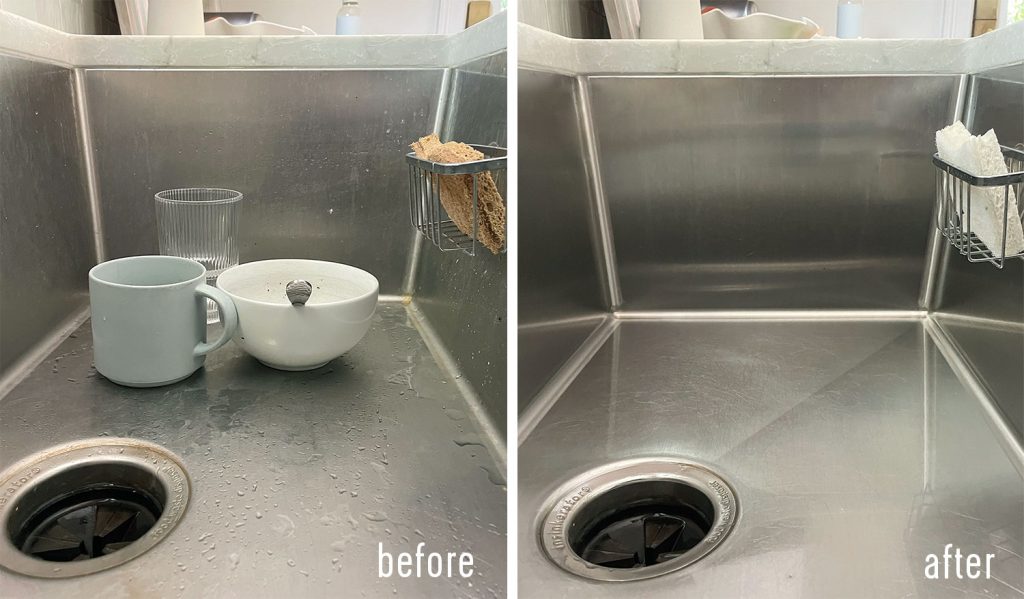
Stainless Steel: Avoid Scratches While Eliminating White Haze
Never use steel wool or leave bleach sitting – these create permanent scratches and discoloration. Stainless steel shows every fingerprint and water spot, but proper technique yields a mirror finish.
- Rinse with hot water to remove loose debris
- Mix 1 teaspoon dish soap with 1 quart hot water
- Wipe with microfiber cloth moving front-to-back (always follow the grain direction)
- For stubborn stains, apply baking soda paste with gentle circular motions
- Rinse completely and buff dry immediately
- Monthly: Polish with Bar Keepers Friend for professional shine
Critical mistake: Using circular motions on stainless steel. This creates visible cross-grain scratches that trap bacteria. Always move parallel to the sink’s grain pattern.
Porcelain Sink Revival: Bleach for White, Baking Soda for Color
Bleach destroys colored porcelain but safely whitens stains on white surfaces. NSF-tested protocols prevent surface damage while eliminating bacteria.
White porcelain method:
– Fill basin with warm water (1 inch deep)
– Add 1 tablespoon bleach per gallon – never exceed 5 minutes contact time
– Drain, then scrub with baking soda paste using non-abrasive sponge
– Rinse corners thoroughly where residue hides
Colored porcelain method:
– Use pH-neutral liquid cleaner only
– Apply baking soda paste for stains (no bleach ever)
– Dry immediately to prevent water spots
Natural Stone Protection: Seal Against Acid Damage
Acids etch granite and marble permanently – lemon juice or vinegar left for 60 seconds creates irreversible pits. Your stone sink needs pH-neutral care exclusively.
- Clean spills immediately (especially tomatoes, wine, citrus)
- Use stone-specific cleaner like Granite Gold daily
- Apply impregnating sealer every 6-12 months
- Always place trivets under hot pans to prevent thermal shock cracks
- For stains, make baking soda poultice: paste + cling film for 24 hours
Chemical-Free Drain Maintenance That Actually Works
Weekly Baking Soda and Vinegar Flush Sequence
This natural method prevents 80% of clogs without corroding pipes. The fizzing action lifts grease and food debris that harbor odor-causing bacteria.
- Pour ½ cup baking soda directly into drain
- Add 1 cup white vinegar – cover drain immediately with stopper
- Wait 15 minutes (time it – less is ineffective, more damages seals)
- Flush with full kettle of boiling water
For disposal sinks: Add ice cubes and coarse salt before the vinegar step. The ice scouring action cleans grinding blades while salt cuts grease.
Unclogging Your Sink Safely (Step-by-Step)
:max_bytes(150000):strip_icc()/how-to-unclog-a-kitchen-sink-2718799_sketch_FINAL-6d86f43bcb464f8ca5b61f240c2d8bf9.png)
Never pour chemical drain openers first – they can melt pipes if clogged. Follow this USDA-approved sequence:
- Slow drain? Repeat baking soda/vinegar flush 2x
- Standing water? Use sink plunger (different cup shape than toilet plungers)
- Disposal jam?
– Cut power at circuit breaker
– Remove debris with tongs only (never hands!)
– Reset motor button, then run cold water while activating disposal - Still clogged? Try enzymatic cleaner (NOT lye-based)
Sanitizing Your Sink Like a Restaurant Inspector

USDA Bleach Solution Protocol
This is the only method proven to kill salmonella on sink surfaces. Most commercial sprays require longer contact time than people realize.
- Mix 1 tablespoon unscented bleach per gallon cool water
- Spray underside of faucet and handle bases – bacteria hide here
- Wait 5 minutes (set timer – skipping this wastes effort)
- Rinse thoroughly or wipe with paper towel
Warning: Never mix bleach with vinegar or ammonia. This creates toxic chloramine gas that can hospitalize you. Store cleaners separately.
Commercial Sanitizer Shortcuts
- Clorox Clean-Up: Spray and wait 30 seconds before wiping
- Lysol Kitchen Pro: Requires 60 seconds contact time
- Thymol-based cleaners (Seventh Generation): Needs 10 minutes
Fixing Common Sink Problems in Under 5 Minutes
| Problem | Immediate Fix | Prevention Strategy |
|---|---|---|
| Hard water spots | Vinegar-soaked cloth (5 min) | Wipe dry after every use |
| White haze on stainless | Bar Keepers Friend polish | Avoid leaving hot pans directly in sink |
| Rust specks | Nylon pad + stainless cleaner | Rinse cast-iron cookware immediately |
| Drain odors | Ice cubes + citrus peels in disposal | Use strainer for all food scraps |
| Stone etching | Baking soda poultice (24h) | Reseal every 6 months; wipe acid spills instantly |
Monthly Preservation Tactics That Extend Sink Life
Stone Sink Sealing Schedule
Test if resealing needed: Sprinkle water droplets – if they soak in within 10 minutes, reseal immediately. Unsealed stone absorbs bacteria and stains permanently.
- Clean thoroughly and let dry 24 hours
- Apply impregnating sealer with lint-free cloth
- Wipe excess after 3 minutes
- Let cure 24 hours before use
Protective Accessories You Actually Need
- Bottom grid – prevents scratches from metal cookware (stainless/copper)
- Silicone trivet – stops thermal shock cracks in stone/composite sinks
- Sink caddy – keeps metal scrubbers off sink floor (prevents rust transfer)
Monthly inspection checklist:
– Check for chips in porcelain edges
– Examine caulk around sink rim for separation
– Test disposal reset button functionality
– Replace worn sink mats that trap moisture
Essential Sink Maintenance Supply Checklist
Non-negotiable items:
– Microfiber cloths (dedicated only for sink)
– Baking soda (1 lb box – $2)
– Distilled white vinegar (gallon – $3)
– Bar Keepers Friend cleanser ($5)
– Nylon non-scratch scrub pad
Worth the upgrade:
– Stone-specific cleaner (Granite Gold)
– Stainless steel polish for mirror finish
– Protective sink grid ($12)
Mastering how to maintain kitchen sink hygiene takes just 30 seconds daily plus 15 minutes weekly. That tiny investment prevents bacterial hazards identified by USDA testing while keeping your sink looking new for 20+ years. Remember: drying your sink completely after cleaning is the single most effective habit for preventing water spots and bacterial growth. Start tonight – your future self (and dinner guests) will never see a grimy sink edge again. For immediate action, implement the daily 30-second routine tonight and the weekly baking soda/vinegar drain flush this weekend. Your sink will thank you with decades of reliable service.